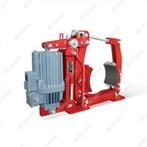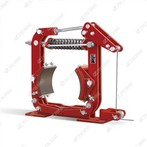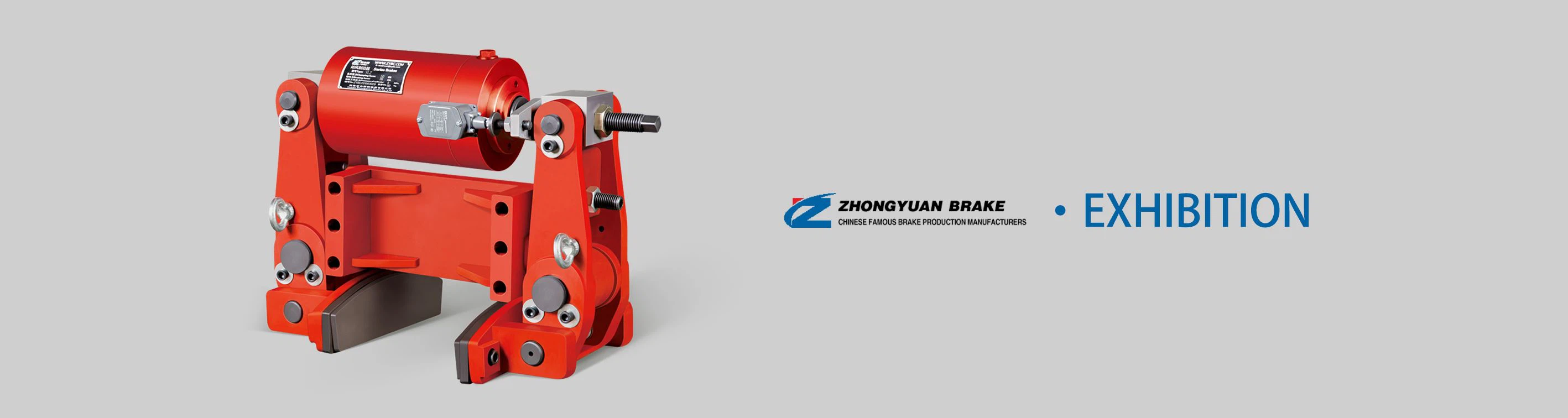
1. Model Interpretation & Core Function
The DJPZ-02's model and design focus on motor-specific braking needs, with clear parameter matching and functional positioning:
| Model Segment | Meaning |
|---|---|
| DJPZ | Motor Disc Brake Series (normally closed, electromagnetic release, motor-mounted integration) |
| 02 | Size grade: Small-to-medium torque variant, adapted to small-to-medium power motors |
Its core functions target motor-driven equipment's safety and precision requirements:
Motor Synchronized Braking: Works in tandem with motor power on/off to realize instant release and braking, ensuring consistent equipment operation logic.
Fail-Safe Protection: Automatically engages via spring force in motor power loss or circuit failure, preventing inertial runaway of motor shafts and loads.
Precise Positioning: Delivers rapid, stable braking torque to stop motor shafts quickly, supporting high-precision positioning of workpieces or equipment.
Emergency Manual Operation: Equipped with a manual release mechanism for maintenance and troubleshooting under unexpected power outages.
2. Working Principle
The DJPZ-02 operates on a fail-safe principle (spring force for braking, electromagnetic force for release), with synchronization to motor power supply and rapid response. Its working cycle includes three key states:
2.1 Brake Release (Operating State)
When the matched motor is powered on, the brake's internal electromagnetic coil is synchronously energized with DC power (common voltages: DC99V/DC170V).
The energized coil generates strong electromagnetic attraction, pulling the armature and compressing the internal high-tension springs (65Mn steel).
The brake disc (integrated with the motor shaft) disengages from the armature end cover, creating a 0.3–0.5 mm clearance. The motor shaft rotates freely without friction, driving the load to operate normally.
2.2 Brake Engagement (Safety State)
When the motor is powered off, shut down, or a circuit fault occurs, the electromagnetic coil loses power instantly, and the electromagnetic attraction dissipates.
The compressed springs rebound rapidly, pushing the armature to clamp the brake disc tightly.
Friction between the armature, brake disc, and fixed end cover generates stable braking torque, quickly decelerating and stopping the motor shaft to prevent inertial operation of the equipment.
2.3 Manual Emergency Release (Auxiliary State)
In case of unexpected power outages or during equipment debugging/maintenance, operators can use the built-in manual release lever (mechanical structure) to retract the armature.
This disengages the brake disc temporarily, allowing manual rotation of the motor shaft for maintenance, troubleshooting, or emergency reset.
Key Design Support
Synchronous Power Supply Logic: The brake coil is wired in parallel with the motor control circuit, ensuring synchronized on/off to avoid operational asynchrony.
Automatic Clearance Compensation: A built-in precision mechanism compensates for minor brake disc/armature wear, maintaining consistent braking performance without manual adjustment.