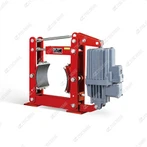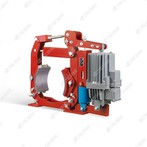
The MW Series is a range of compact, industrial-grade electromagnetic drum brakes designed for light-to-medium duty rotating machinery, including small conveyors, packaging equipment, textile machines, printing presses, and mini winches. Characterized by its electromagnetic actuation (electric current drives braking force) and normally closed design (spring-engaged when de-energized), this series delivers reliable dynamic braking, precise stopping, and fail-safe load holding for low-to-moderate load applications (0.1–5 tons). Its compact structure, low power consumption, and easy electrical integration make it ideal for indoor industrial environments where space and energy efficiency are prioritized. Below is a detailed breakdown of its core attributes, working principle, key features, typical applications, and technical specifications:
1. Core Definition & Functional Role
The MW Series is engineered as a light-duty safety brake to handle routine stopping and emergency protection for small machinery. Its primary functions include:
Dynamic Braking: Decelerating or stopping low-inertia equipment (e.g., small belt conveyors, packaging lines) with smooth, controlled torque to avoid product damage or mechanical shock.
Static Load Holding: Securing lightweight loads (e.g., packaged goods, textile rolls) in place during pauses, maintenance, or power outages.
Emergency Braking: Automatically engaging when power is cut off or electrical faults occur, preventing unintended machinery movement-critical for operator safety in workshops or production lines.
Its drum-style design ensures simplicity and cost-effectiveness, making it a popular choice for small-scale industrial and commercial applications.
2. Working Principle
The MW Series operates on a fail-safe electromagnetic cycle, relying on spring force for braking and electromagnetic force for release. Its working states are as follows:
2.1 1. Brake Engagement (Stopping/Holding/Emergency)
Normal Stopping: When the machinery needs to stop, the control system cuts power to the brake's electromagnetic coil. The magnetic field dissipates, and internal return springs push the brake shoes against the rotating drum.
Friction Generation: Friction between the shoes' linings and the drum generates braking torque (10–300 N·m), decelerating the drum to a stop within ≤ 1.0 second (under rated load).
Static Holding: For load security during pauses, the coil remains de-energized. The springs keep the shoes engaged, applying constant torque to hold the load without consuming power.
Emergency Braking: In case of sudden power loss or coil failure, the brake engages instantly (≤ 0.6 seconds) to lock the drum, preventing accidents.
2.2 2. Brake Release (Normal Operation)
When the machinery starts, the control system energizes the electromagnetic coil. A magnetic field is generated, attracting a movable armature connected to the brake shoes.
The magnetic force overcomes the return spring tension, pulling the shoes away from the drum and creating a small gap (0.2–0.4mm). The drum (and connected shaft) rotates freely, enabling normal operation.
3. Core Structure & Key Components
The MW Series features a simplified, space-saving design with four key components:
3.1 1. Electromagnetic Actuation Unit
Coil Assembly: A copper-wound coil with Class B insulation (heat-resistant up to 130°C), designed for standard low-voltage power supplies (24V DC, 110V AC, or 220V AC). It is encapsulated in a plastic or metal housing to protect against dust and moisture.
Armature: A thin steel plate (high magnetic permeability) linked to the brake shoe mechanism. When the coil is energized, the armature is attracted, pulling the shoes away from the drum.
3.2 2. Brake Shoe & Lining Assembly
Brake Shoes: Lightweight steel or ductile iron shoes shaped to match the drum's curvature (drum diameter: 80–200mm). Smaller models use a single shoe; larger models use two shoes for balanced force.
Friction Linings: Non-asbestos resin-based composites with a stable friction coefficient (μ ≥ 0.35) and low wear rate. The linings are bonded or riveted to the shoes for easy replacement.
3.3 3. Return Springs
Small tension or compression springs (typically 1–3 per brake) that provide the force to engage the brake when the coil is de-energized. Their tension is pre-calibrated to match the brake's torque rating.
3.4 4. Adjustment & Protection Features
Gap Adjusters: Screw-type adjusters to fine-tune the distance between shoes and drum, compensating for lining wear over time.
Insulation & Ventilation: The coil housing includes ventilation slots to dissipate heat, preventing overheating during continuous operation.
Basic Sealing: IP54 protection (standard) resists dust and splashing water, suitable for indoor workshops.
4. Key Features & Advantages
The MW Series is tailored to light-duty applications, offering the following benefits:
4.1 1. Compact & Lightweight
With a weight range of 1–8 kg and a low-profile design, it fits in tight spaces-ideal for small machinery like desktop packaging equipment or textile spindles.
4.2 2. Energy Efficiency
Low power consumption (5–30W) reduces operating costs, making it suitable for equipment running 8+ hours daily (e.g., production line conveyors).
4.3 3. Simple Integration
Requires only a direct electrical connection to the machinery's control system (compatible with PLCs or simple relays), eliminating the need for complex pneumatic/hydraulic setups.
4.4 4. Low Maintenance
Friction linings can be replaced in ≤ 15 minutes with basic tools.
The coil and mechanical components have a long service life (≥ 8,000 hours under normal use), requiring minimal upkeep.
4.5 5. Fail-Safe Reliability
The normally closed design ensures automatic engagement in power loss scenarios, complying with basic safety standards for light industrial equipment (e.g., GB/T 10435, IEC 60204).
5. Typical Applications
The MW Series is widely used in light-industry and commercial settings, including:
Packaging Machinery: Labeling machines, sealing equipment, and small conveyors in food, pharmaceutical, or electronics packaging lines.
Textile & Printing Equipment: Spinning machines, looms, and paper rollers, where precise stopping prevents material tearing.
Mini Winches & Hoists: Handheld electric winches for lifting tools or small parts in workshops or garages.
Office & Commercial Equipment: Industrial shredders, document binders, and small material handlers.