
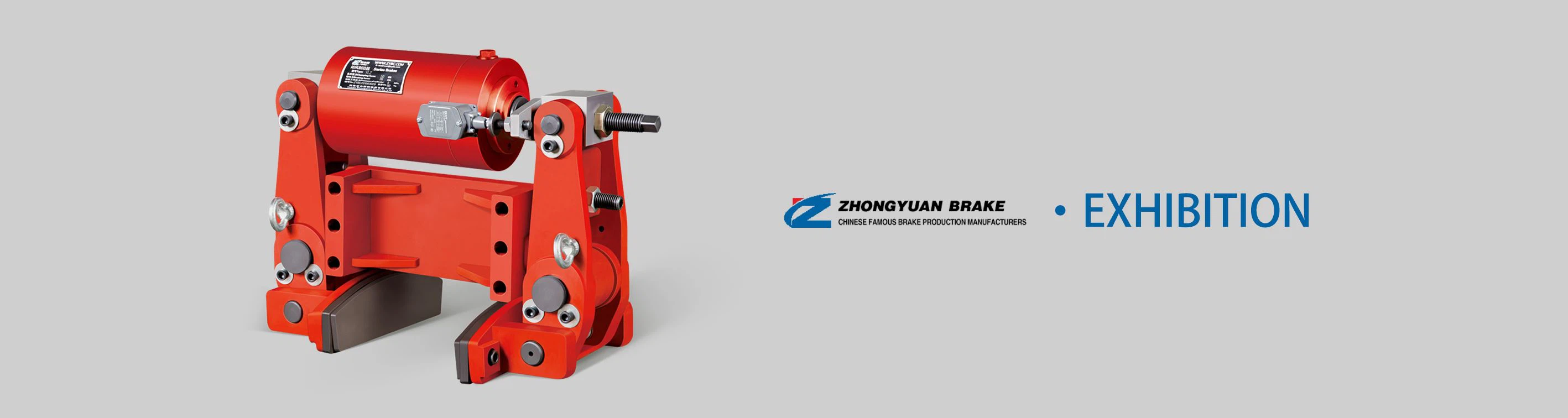
The TYWZ2-300 series foot-operated hydraulic drum brakes are a mechanical-hydraulic braking system designed for applications where manual, operator-controlled braking is required. Here is a description of their typical features and operation:
Core Operating Principle:
This series is a manually actuated, hydraulic drum brake. The braking force is generated and applied entirely by the physical action of an operator pressing a foot pedal, which transmits force through a closed hydraulic system.
Operation: The operator depresses a foot pedal. This pedal is connected to a hydraulic master cylinder. The pedal force pressurizes hydraulic fluid in the system. This pressure is transmitted via hydraulic lines to one or more hydraulic wheel cylinders (brake actuators) mounted on the brake assembly. The pressurized fluid pushes the pistons inside the wheel cylinders outward, which in turn forces the brake shoes apart and against the inner surface of the rotating brake drum, generating friction and braking torque. Releasing the foot pedal relieves the hydraulic pressure, allowing return springs to pull the brake shoes back to their resting position, disengaging the brake.
Key Features:
Model Designation:
TYWZ2-300: "TYWZ2" is the series prefix, likely indicating a specific design for foot (pedal) operation. The number "300" typically denotes a key specification, most commonly the diameter of the brake drum in millimeters (mm). Therefore, this series uses a 300mm diameter brake drum.
Foot Pedal Operation: Provides direct, proportional control of braking force by the operator. The braking effort and feel can be adjusted through pedal leverage and master cylinder bore size. It is a purely mechanical system independent of external power.
Hydraulic Force Transmission: Uses an incompressible hydraulic fluid to transmit and amplify the pedal force from the master cylinder to the wheel cylinders at the brake drum. This allows for efficient force transmission over a distance and to multiple brake points from a single pedal.
Drum Brake Design: Utilizes internal expanding brake shoes. This design is robust, provides good braking force, and is well-protected within the drum, making it suitable for dirty or dusty environments.
Self-Adjusting Mechanism (Likely): Many modern hydraulic drum brakes include an automatic adjuster that compensates for brake shoe wear, maintaining consistent pedal travel and braking performance.
Simple & Reliable: As a manually powered system, it does not rely on electrical power or compressed air, making it highly reliable and suitable for basic machinery, trailers, or applications where simplicity is key.
Dual-Circuit Safety (Possible on some models): More advanced versions may feature a dual (split) hydraulic circuit, where failure in one circuit (e.g., a leak) still allows partial braking from the other.
Typical Applications:
These brakes are commonly found on equipment requiring independent, operator-controlled braking, such as:
Industrial trailers and heavy-duty equipment haulers.
Agricultural machinery (e.g., towed implements, grain carts).
Construction equipment (e.g., generators, light compaction equipment on trailers).
Material handling vehicles like certain types of manually towed or pushed carts.
Older models of automobiles, trucks, and motorcycles (as the foundation brake).
Summary:
The TYWZ2-300 series is a manual, foot-operated hydraulic drum brake system. It is a self-contained, power-free braking solution that provides direct control to the operator. The "300" indicates the use of a 300mm brake drum. Its operation is based on pure mechanical-hydraulic force transmission: foot pressure on the pedal creates hydraulic pressure, which activates the brake shoes inside the drum. It is valued for its simplicity, reliability, and independence from external power sources, making it suitable for trailers, towed equipment, and other applications where a dedicated, operator-controlled brake is needed.


