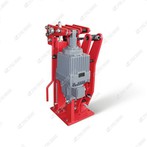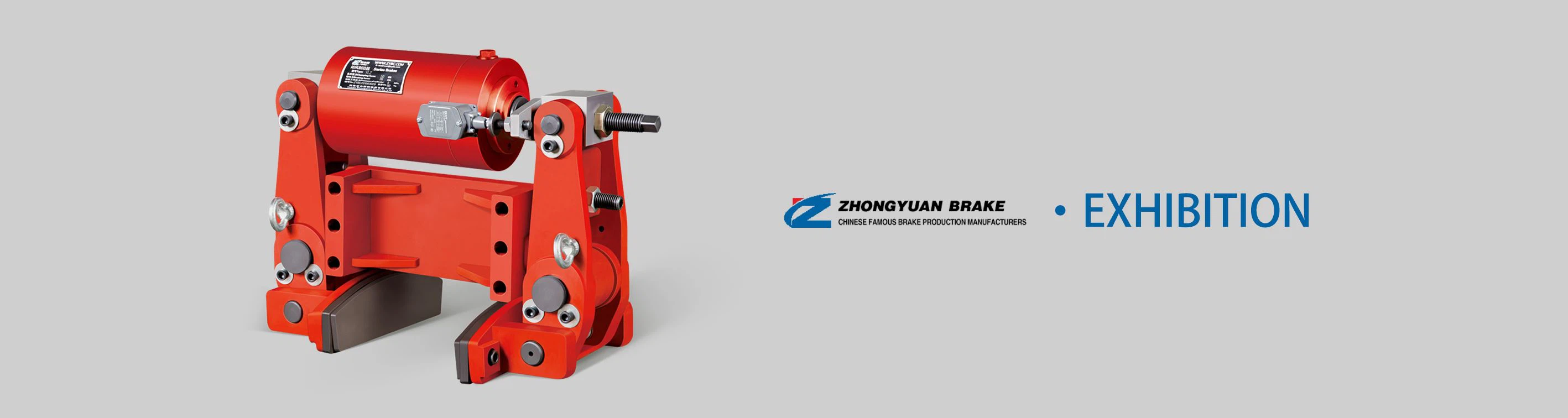
Using the YJGQ-31 series hydraulic rail clamp requires strict adherence to safety precautions to prevent equipment damage, crane derailment, or personal injury. These precautions cover installation, operation, maintenance, and emergency handling scenarios, tailored to its normally-closed, spring-actuated, hydraulic-released design:
1. Installation Safety Precautions
Rail Matching & Alignment
Ensure the rail model matches the clamp's applicable range (P50, QU70–QU120). Do not install it on rails with deformation, cracks, or excessive wear (rail top surface wear >3 mm is prohibited).
Align the clamp jaws with the rail centerline strictly; the horizontal/vertical deviation should not exceed ±2 mm. Misalignment will cause uneven clamping force, leading to rail slippage or clamp damage.
Mounting Fastener Safety
Use the specified high-strength M30 bolts, and tighten them to the rated torque of 180–220 N·m with a torque wrench. Do not use ordinary bolts or reuse deformed bolts.
Install anti-loosening washers under the bolt heads; recheck the torque after the first 100 hours of operation to prevent bolt loosening during vibration.
Interlock Wiring Verification
Connect the limit switch signal to the crane traveling mechanism control system reliably. Confirm that the crane cannot start if the clamp is not fully released (interlock function must be 100% effective; never bypass the limit switch for convenience).
2. Operational Safety Precautions
Pre-Operation Check MandatoryBefore starting the crane every shift:
Check the hydraulic station pressure (must be within 10–15 MPa; low pressure will cause release failure, overpressure will damage seals).
Test the clamp's release/clamping action: Observe that the jaws separate from the rail completely when released, and clamp tightly without gaps when braking.
Verify the limit switch indicator light is on when released; ensure no abnormal noise or oil leakage during action.
Strict Prohibition of Overload Use
Do not use the clamp beyond its rated anti-slip force of 315 kN. In high-wind environments (wind speed exceeding the crane's design limit), use it in combination with anchoring devices and wind-resistant cables (the clamp alone cannot withstand extreme wind loads).
Prohibit using the clamp for emergency braking during crane travel; it is only for windproof parking and static anti-slip.
Power Failure Emergency Handling
If the power/hydraulic system fails during operation, the clamp will clamp the rail automatically. Do not force the crane to travel; use the manual pump on the hydraulic station to release the clamp for maintenance or emergency movement.
After power recovery, test the clamp's action 3 times continuously to confirm normal function before resuming crane operation.
3. Maintenance Safety Precautions
Lockout-Tagout (LOTO) Before Maintenance
Before any maintenance (e.g., replacing linings, overhauling the hydraulic system), cut off the power supply of the hydraulic station and crane traveling mechanism, and hang a "No Operation" warning tag on the switch.
Do not perform maintenance when the clamp is in the clamping state; use the manual pump to release it first, and support the clamp jaws with a safety bracket to prevent accidental clamping during maintenance.
Lining & Spring Replacement Safety
Replace the friction lining immediately when its thickness is ≤3 mm. Do not use worn linings, as they will reduce clamping force and cause slippage.
When replacing disc springs, replace the entire set (do not mix new and old springs). Ensure the springs are installed in the correct direction; reversed installation will cause insufficient clamping force.
Hydraulic System Maintenance Rules
Use only ISO VG46 hydraulic oil; mixing different brands or types of oil will cause seal hardening and system failure.
When disassembling hydraulic components, clean the interfaces with clean cloths (do not use cotton yarn to avoid fiber residue blocking the oil circuit). After maintenance, bleed the air from the system completely to prevent release delay.
Corrosion Protection for Outdoor Use
In coastal salt-fog environments, apply anti-rust oil to the clamp body and fasteners every 3 months. Inspect the anti-corrosion coating monthly; repair peeling coating in time to prevent rust from weakening structural strength.
4. Special Safety Precautions for Harsh Environments
Low-Temperature Environment (-20℃ to 0℃)
Replace the hydraulic oil with low-temperature resistant ISO VG46 oil; preheat the hydraulic station for 5–10 minutes before operation to avoid oil viscosity increase causing release failure.
Clean the ice and snow on the rail and clamp jaws before operation; ice will reduce friction between the jaws and rail, leading to anti-slip failure.
High-Temperature Environment (40℃ to 50℃)
Monitor the hydraulic oil temperature continuously; stop operation immediately if the temperature exceeds 60℃ to prevent oil deterioration or seal aging.
Check the limit switch contact temperature monthly; high temperature will cause poor contact, so replace the switch with a high-temperature resistant type if necessary.
5. Prohibited Behaviors
Do not modify the clamp structure (e.g., cutting the disc spring, widening the jaws) to adapt to non-standard rails.
Do not use the clamp to drag the crane; this will cause severe wear to the jaws and rail.
Do not perform maintenance during crane operation or in high-wind weather; stop the crane in a wind-shielded area first.