
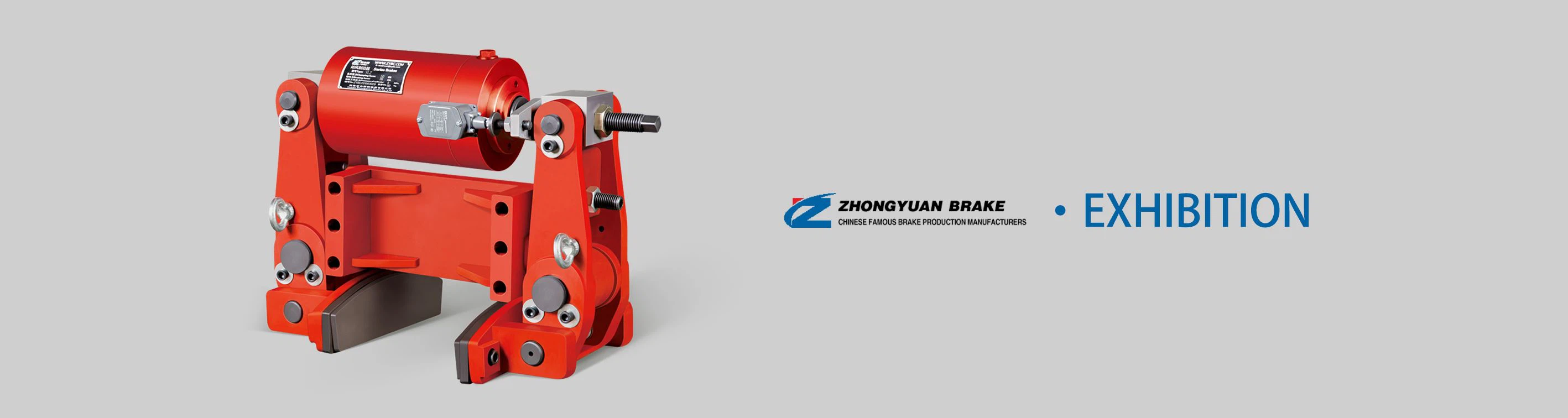
The YWZ4-300/B30 series explosion-proof electro-hydraulic drum brake is a normally-closed, fail-safe braking device designed for hazardous environments. It is specially paired with explosion-proof electro-hydraulic thrusters (e.g., ED301/6Ex, BEd121/6 series) to provide reliable braking for lifting, transportation, and material handling equipment in coal mines, petrochemical plants, and gas workshops. Its explosion-proof performance complies with GB3836.2-2000 standards, with explosion-proof markings Exd I (for underground coal mines) and Exd II CT4 (for IIA/IIB/IIC flammable gas zones with T1-T4 temperature classes).
Core Technical Parameters
| Parameter | Standard Value | Notes |
|---|---|---|
| Rated Drum Diameter | 300 mm | Matching standard brake drum specifications |
| Rated Braking Torque | 630–1250 N·m | Adjustable via thruster thrust and spring preload |
| Matching Thruster Model | B30 (e.g., ED30/5, BEd30/5) | Explosion-proof electro-hydraulic thruster |
| Thruster Rated Thrust | 3000 N | Core drive force for brake release |
| Brake Shoe Clearance | 1.0–1.5 mm | Automatically balanced by gap adjustment mechanism |
| Friction Lining Material | Non-asbestos wear-resistant alloy | Low friction coefficient attenuation, explosion-proof compliant |
| Explosion-Proof Marking | Exd I / Exd II CT4 | Dual adaptation for mine and petrochemical scenarios |
| Working Voltage | 380V/660V 3-phase AC | Compatible with hazardous area power grids |
| Protection Class | IP55 | Dustproof and waterproof for harsh industrial environments |
| Working Temperature | -20℃ to 40℃ | Consistent with explosion-proof thruster operating conditions |
| Weight | ~85 kg | Compact structure for easy installation on equipment |
Key Structural Features
Explosion-Proof Integrated Design
The brake body, limit switch housing, and thruster connection interface adopt flameproof structural design, with precision-machined flame paths on the junction surfaces to contain internal sparks and prevent external explosion risks.
All electrical components (explosion-proof limit switch, wiring terminals) use certified explosion-proof parts; cable entry uses sealed explosion-proof joints to ensure overall explosion-proof integrity.
Fail-Safe Normally-Closed Mechanism
Under power-on condition, the matched explosion-proof thruster generates hydraulic pressure to push the brake arm, overcoming the force of the braking spring and separating the brake shoe from the drum to release the brake.
When power is cut off or the thruster fails, the braking spring drives the brake shoe to clamp the drum rapidly, achieving emergency braking to prevent equipment slipping or runaway, which is the core safety guarantee for lifting and transportation equipment.
Automatic Gap Adjustment & Easy Maintenance
Equipped with a mechanical interlocking gap balancing device, which can automatically compensate for the clearance between the brake shoe and the drum caused by lining wear, maintaining the clearance within the range of 1.0–1.5 mm. It eliminates the need for frequent manual adjustment and ensures stable braking torque.
The friction lining adopts a clip-on installation structure, which can be replaced quickly without disassembling the entire brake body, reducing maintenance downtime in hazardous areas.
Corrosion Resistance & Durability
The brake body is treated with anti-corrosion spraying, and fasteners are made of stainless steel or hot-dip galvanized materials, suitable for humid, dusty, and corrosive environments in mines and coastal ports.
The brake arm hinge uses a self-lubricating bushing, which reduces friction and wear and extends the service life of the brake.
Working Principle
The YWZ4-300/B30 series adopts the electro-hydraulic release + spring braking working mode, which is highly compatible with explosion-proof thrusters:
Brake Release (Equipment Operation): When the host equipment is started, the explosion-proof thruster is powered on. The motor drives the hydraulic pump to generate pressure, pushing the push rod to extend. The push rod acts on the brake arm to overcome the spring force, separating the brake shoe from the drum, and the brake is released.
Brake Application (Equipment Stop/Emergency): When the equipment stops, the thruster loses power. The hydraulic pressure disappears, and the braking spring pulls the brake arm to reset, making the brake shoe clamp the drum tightly to achieve braking. In case of power failure or thruster fault, the spring will drive the brake to act immediately to ensure safety.
Interlock Protection: Equipped with an explosion-proof limit switch, which can send a brake release/closure signal to the host control system. The equipment can only start when the brake is fully released, preventing misoperation in hazardous environments.


