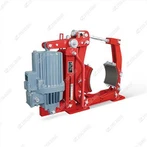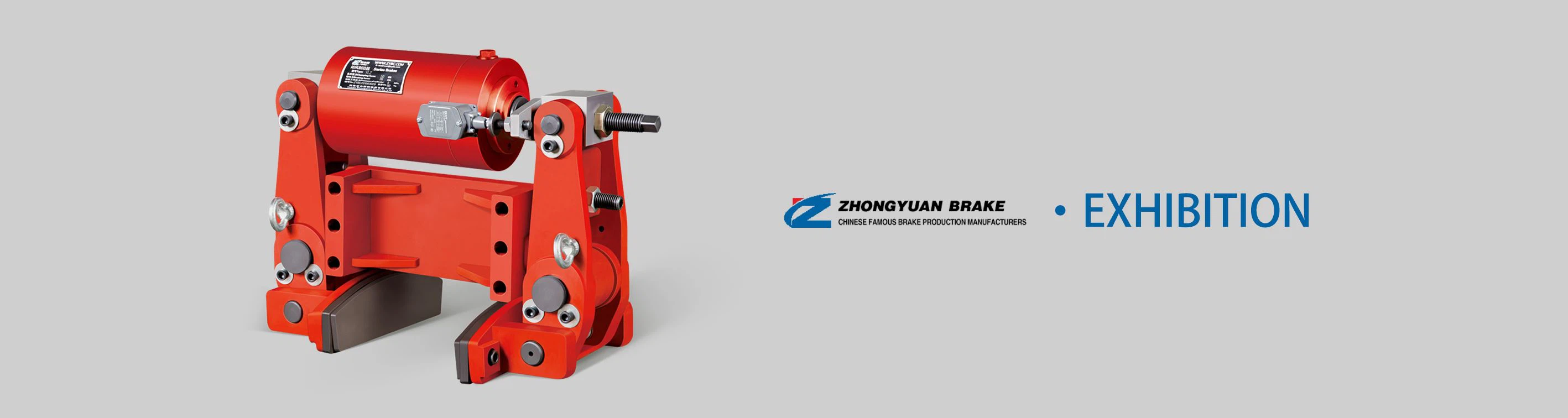
The SBD125-A is a high-performance normally closed hydraulic caliper disc safety brake, optimized for heavy-load braking of industrial equipment such as cranes, hoists, and conveyors. It combines reliable braking force, durable structure, and user-friendly installation, making it suitable for both general and harsh industrial environments. Below are its core advantages and detailed installation specifications:
1. Core Advantages
1.1 Reliable Safety Performance
Adopts a normally closed design-relying on high-tension disc springs to maintain braking state without hydraulic pressure. In case of hydraulic system failure or sudden power loss, it automatically clamps the brake disc within ≤0.3 seconds, preventing equipment runaway and ensuring personnel/property safety in emergency scenarios. Optional limit switches (for brake release and lining wear) enable interlock control with the host PLC, realizing real-time fault monitoring and early warning.
1.2 Stable & Efficient Braking
Features a 125 mm caliper opening range and asbestos-free high-temperature resistant friction linings (friction coefficient μ ≥ 0.45). The linings offer stable performance across -20°C to 200°C, unaffected by water, dust, or salt spray-ensuring consistent braking torque (rated torque: 800–1200 N·m) in ports, mines, or coastal environments. The dual-sided clamping structure distributes force evenly on the brake disc, minimizing thermal deformation and avoiding brake fade during long-term high-frequency operation.
1.3 Durable & Low Maintenance
Equipped with imported FKM high-pressure seals and a fully sealed caliper structure, effectively preventing dust, moisture, and corrosive substances from entering internal components. The brake disc (made of 42CrMo forged steel) and friction linings have a service life of ≥15,000 working hours. A built-in automatic wear compensation mechanism eliminates the need for manual adjustment of brake clearance, reducing maintenance frequency and downtime.
1.4 Compact & Versatile Design
Boasts a compact, lightweight structure (net weight ≈65 kg) with flexible installation options (horizontal/vertical mounting). It adapts to brake discs of 20–30 mm thickness and is compatible with various industrial equipment (load capacity: 30–100 tons). The modular hydraulic interface simplifies connection to existing hydraulic systems, reducing on-site integration difficulty.
2. Installation Specifications
2.1 Pre-Installation Preparation
Bracket & Base Requirements: The mounting bracket (not supplied with the brake) must be manufactured to match the dimensions, tolerances, and surface roughness specified in the product manual. The base should be welded or bolted to a rigid structure, ensuring no deformation or vibration during braking.
Component Inspection: Check for damage to the caliper, brake disc, linings, and seals. Verify that the hydraulic system is clean (oil cleanliness ≤ NAS 8) and uses ISO VG46 anti-wear hydraulic oil.
Tool Preparation: Prepare a torque wrench (range: 0–300 N·m), caliper gauge, level meter, and 10.9-grade high-strength bolts with nylon lock inserts.
2.2 Core Installation Steps
Positioning the Brake: Align the caliper with the brake disc, ensuring the exhaust joint faces upward to facilitate air release from the hydraulic system. The distance between the caliper and brake disc should be 2–3 mm on both sides.
Securing the Brake: Fasten the caliper to the bracket using 10 or more 10.9-grade M16 bolts (with quenched and tempered 45# steel flat washers). Tighten bolts to the specified torque (180–200 N·m) in a diagonal sequence to ensure uniform clamping force.
Hydraulic Connection: Connect the brake's hydraulic inlet/outlet to the system using high-pressure hoses (burst pressure ≥40 MPa). Use thread sealant for pipe connections to prevent oil leakage, and bleed air from the hydraulic circuit after installation.
2.3 Installation Precision Control
Brake Disc Runout: The maximum end runout of the brake disc must not exceed ±0.25 mm; radial runout ≤±0.15 mm.
Perpendicularity & Centering: The base's perpendicularity deviation relative to the brake disc ≤±3‰; the brake disc's centering deviation relative to the caliper center ≤±2 mm.
Lining Clearance: After installation, the clearance between the friction linings and brake disc should be 0.5–1.0 mm on both sides, adjustable via the hydraulic system pressure.
2.4 Post-Installation Calibration & Testing
Action Test: Activate the hydraulic system (working pressure: 12–16 MPa) to verify smooth brake release and engagement. Ensure no jamming or abnormal noise during operation.
Torque Verification: Conduct a load test to confirm the braking torque meets the rated requirement (800–1200 N·m). Adjust the hydraulic pressure if necessary.
Safety Check: Test the emergency braking function by cutting off power/hydraulic supply-confirm the brake clamps the disc within ≤0.3 seconds. Verify that the limit switches and PLC interlock system work normally.