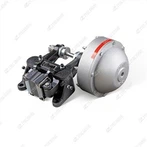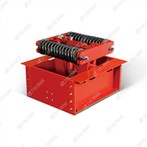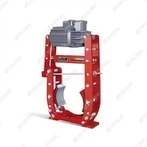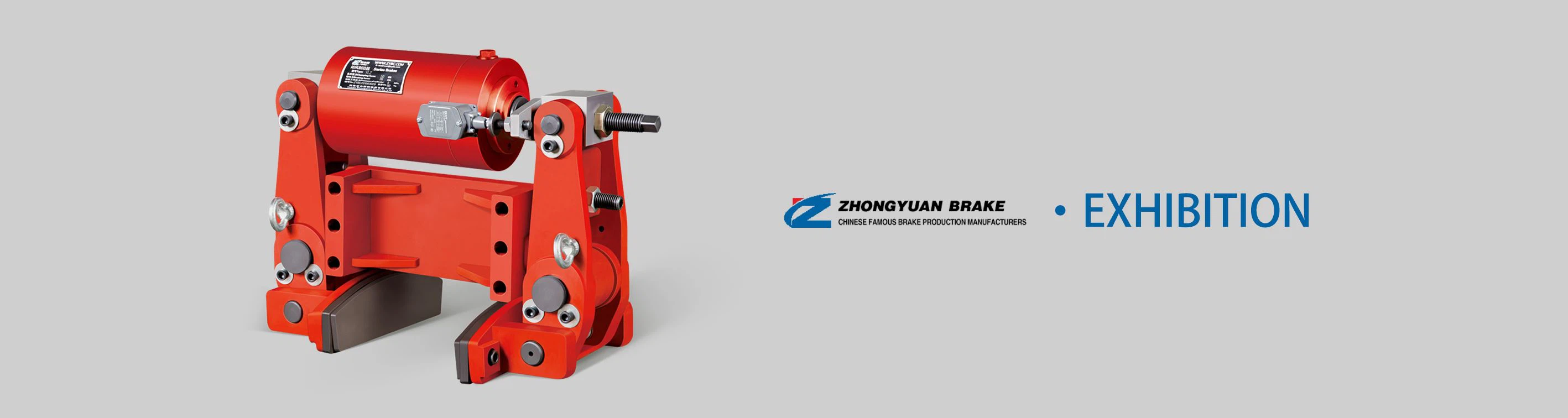
The BEd Series is a range of industrial-grade explosion-protected electro-hydraulic thrusters engineered for safe, heavy-duty actuation in hazardous explosive environments-including underground coal mines, petrochemical plants, oil refineries, and gas storage facilities. Built on the foundation of the standard ED Series thrusters, it integrates a flameproof enclosure, explosion-safe components, and robust hydraulic systems to eliminate ignition risks while delivering high thrust output. Designed primarily to drive heavy-duty brakes (e.g., YWZ5 series drum brakes) and clutches in high-risk machinery, the BEd Series covers thrust forces from 500–12,500 N and stroke lengths from 50–200 mm, making it suitable for medium-to-heavy duty applications (5–200 tons) in explosive zones. Below is a detailed breakdown of its core attributes, working principle, key features, typical applications, and technical specifications:
1. Series Overview & Core Function
The BEd Series (B = Explosion-Protected, E = Electric, d = Flameproof Design) is classified as a safety-critical power unit for explosive environments, bridging electrical control systems and mechanical braking/clutch mechanisms. Its core functions align with high-risk industrial needs:
Heavy-Duty Brake Actuation: Generating linear thrust to release spring-engaged heavy brakes (e.g., mine hoist brakes, port crane brakes) during operation, and ceasing thrust to enable emergency braking.
Clutch Control: Engaging/disengaging clutches for power transmission in machinery like mining conveyors or petrochemical pumps, ensuring smooth torque transfer without ignition risks.
Fail-Safe Operation: Instantly stopping thrust output upon power loss or system faults, allowing brakes to lock machinery and prevent accidents in explosive atmospheres.
With compliance to global explosion safety standards and compatibility with heavy-duty industrial systems, the series is optimized for continuous or intermittent operation in harsh, high-risk settings.
2. Working Principle
The BEd Series operates on a sealed electro-hydraulic conversion principle, identical to the standard ED Series but with enhanced explosion-proof measures to contain internal sparks or heat. Its working cycle includes three key states:
2.1 1. Thrust Generation (Brake Release/Clutch Engagement)
When activated, the explosion-proof electric motor (housed in a flameproof enclosure) drives an integrated gear/vane pump. The pump draws hydraulic oil from the sealed internal reservoir and pressurizes it (8–16 MPa, model-dependent).
Pressurized oil flows into a single-acting hydraulic cylinder, pushing the piston and chrome-plated output rod outward. This generates linear thrust (500–12,500 N) to actuate the target brake/clutch-overcoming spring tension to release brakes or engage clutches.
2.2 2. Thrust Retention (Sustained Operation)
Once the output rod reaches maximum stroke (50–200 mm), a pressure relief valve diverts excess oil back to the reservoir. This maintains stable cylinder pressure, keeping the brake released (or clutch engaged) without overloading the motor-critical for continuous-duty machinery like 24/7 mine conveyors.
2.3 3. Thrust Cessation (Emergency/Reset)
In power loss, system leaks, or emergency shutdowns, the motor and pump stop immediately. Hydraulic pressure dissipates, and the brake's return springs (or clutch's reset force) push the output rod back. Oil flows back to the reservoir, allowing the brake to engage (or clutch to disengage) and secure the machinery.
The flameproof enclosure contains any potential internal sparks or overheating, preventing ignition of external flammable gases/dust.