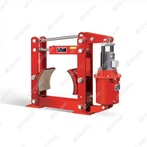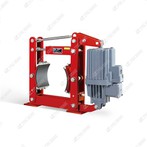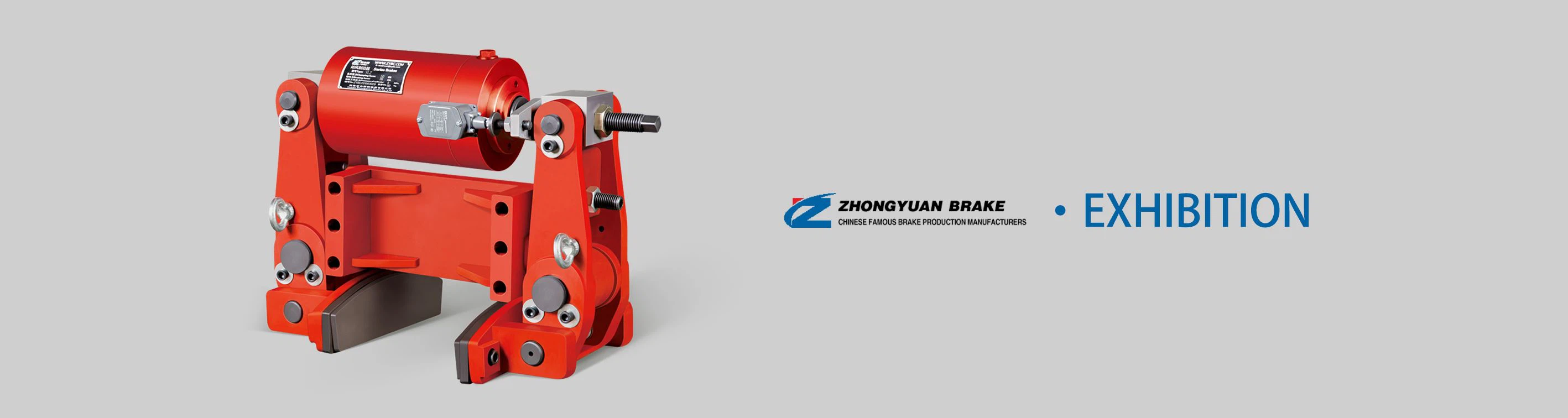
The DLZ25 is a small-to-medium duty power-driven wheel brake from the DLZ series, designed for direct wheel-side braking of industrial equipment. It adopts an electric-hydraulic integrated drive structure (common power supply: AC 380V or DC 24V), with a nominal braking torque of 25 N·m, and features compact size, rapid response, and easy integration. It is widely used in low-speed light-duty equipment requiring automated or semi-automated braking control. Details of its working principle and applications are as follows:
1. Working Principle
The brake operates based on "electric-hydraulic drive for braking + spring reset for release," integrating power control and mechanical stability. The core working process includes three stages:
1.1 Brake Engagement
When braking is required, the integrated electric-hydraulic power unit is energized. The electric motor drives the hydraulic pump to generate 6–10 MPa hydraulic pressure, which is transmitted to the brake's clamping cylinder.
The piston in the cylinder pushes outward under hydraulic force, driving the dual-caliper structure to clamp inward toward the wheel's braking surface (or integrated brake disc).
The asbestos-free resin-based friction linings on the calipers tightly fit the braking surface, generating 25 N·m stable friction torque. This torque resists the wheel's rotation, decelerating the equipment smoothly until it stops, and can hold the wheel stationary to prevent accidental movement.
A built-in pressure-balancing valve ensures uniform clamping force on both sides of the wheel, avoiding braking deviation or uneven wear of linings.
1.2 Brake Release
When the braking signal is terminated, the electric-hydraulic power unit is de-energized. The hydraulic system relieves pressure through a relief valve, and the hydraulic oil flows back to the reservoir.
The return springs (65Mn steel) in the clamping cylinder rebound rapidly, pulling the piston and calipers back to their original positions. A 0.3–0.5 mm clearance is formed between the friction linings and the braking surface, eliminating drag friction.
The wheel rotates freely without constraints, allowing the equipment to operate normally.
1.3 Stability & Control Guarantee
Rapid Response Design: The electric-hydraulic unit's start-up response time ≤0.2 seconds, enabling quick braking engagement to meet the demand for frequent start-stop cycles (up to 500 times per hour).
Wear Compensation Mechanism: A built-in automatic adjuster compensates for lining wear (up to 8 mm), maintaining consistent braking torque and clearance without manual calibration.
Protection Functions: The electric motor is equipped with thermal protection to prevent burnout due to prolonged operation; the hydraulic system adopts sealed design (IP54 protection) to avoid oil leakage and contamination.
2. Typical Applications
The DLZ25 is optimized for light-duty equipment (load capacity: 0.5–5 tons) with low operating speed (≤30 km/h), suitable for automated production lines, logistics yards, and small-scale industrial scenarios. Core applications include:
2.1 Light Material Handling Equipment
Compatible with small electric forklifts, warehouse stackers, and manual handling trucks (1–3 ton load capacity). It provides precise braking during goods transportation and parking in narrow warehouses, enhancing operational safety and positioning accuracy.
Suitable for wheel-side braking of small AGVs (Automated Guided Vehicles) and logistics robots. It integrates with the equipment's control system to achieve automated braking during path switching or obstacle avoidance, ensuring smooth operation of intelligent logistics lines.
2.2 Small Industrial Transport Vehicles
Applied to factory material transporters, electric trolleys, and airport luggage carts. It adapts to smooth indoor floors or flat outdoor paths, delivering reliable braking to prevent sliding during stop-and-go operations.
Used in small rail-mounted transport vehicles (e.g., workshop rail trolleys for workpiece transfer) to achieve precise positioning and emergency braking, matching the rhythm of automated production lines.
2.3 Light Construction & Auxiliary Machinery
Matches small construction equipment such as mini electric loaders, small aerial work platforms, and scissor lifts. It provides safety braking when the equipment is operating or parked on flat construction sites, protecting operators and materials.
Suitable for auxiliary braking of small agricultural transport vehicles (e.g., mini grain transporters, orchard transport carts) and garden machinery (e.g., large lawn mowers), adapting to low-speed outdoor operations.
2.4 General Industrial & Testing Equipment
Installed on the wheeled transmission mechanisms of small conveyors, industrial test benches, and precision equipment. It enables quick emergency braking to avoid workpiece collision or test data deviation.
Used in small amusement equipment (e.g., children's electric cars in parks) and small-scale special vehicles, providing stable and low-noise braking to meet safety and user experience requirements.