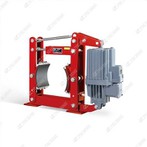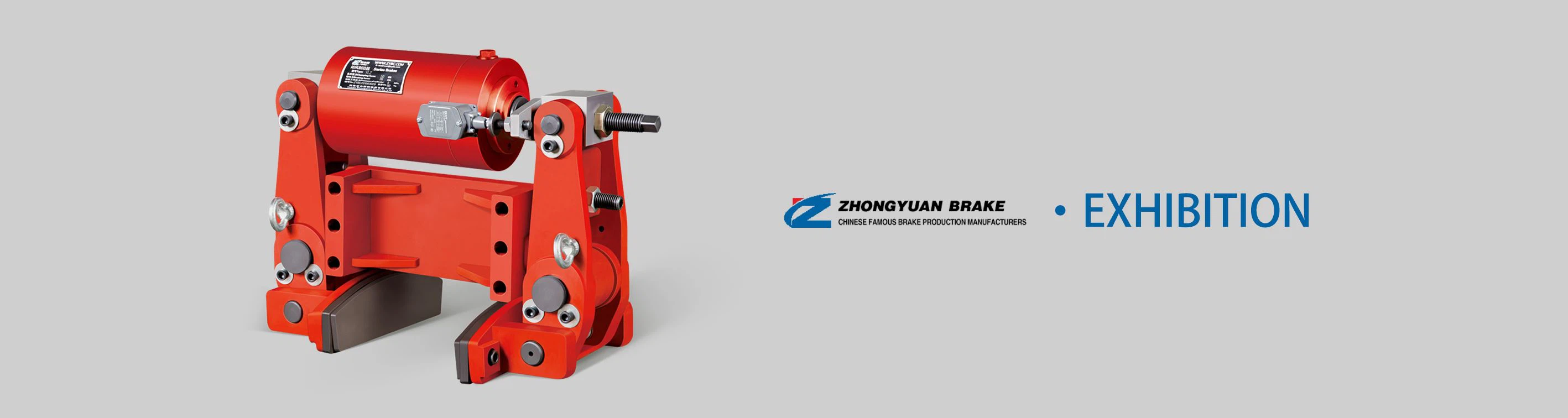
When the mechanism is powered off and stops working, the drive device-thruster of the brake is also powered off at the same time (or delayed power off), and stops driving (thrust is eliminated). At this time, the spring force of the brake spring is transmitted to the brake shoe through the brake arms on both sides, so that the brake surface generates a specified pressure. And establish the formulated braking torque to play a braking role.
When the mechanism is energized, the brake's thruster is also energized and quickly generates enough thrust to push up the pushrod, forcing the brake spring to compress further. The brake arms stretch out to both sides, so that the brake surface of the brake shoe is separated from the brake wheel, the pressure and braking torque of the brake surface are eliminated, and the braking operation is stopped.