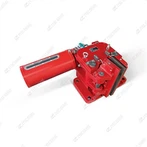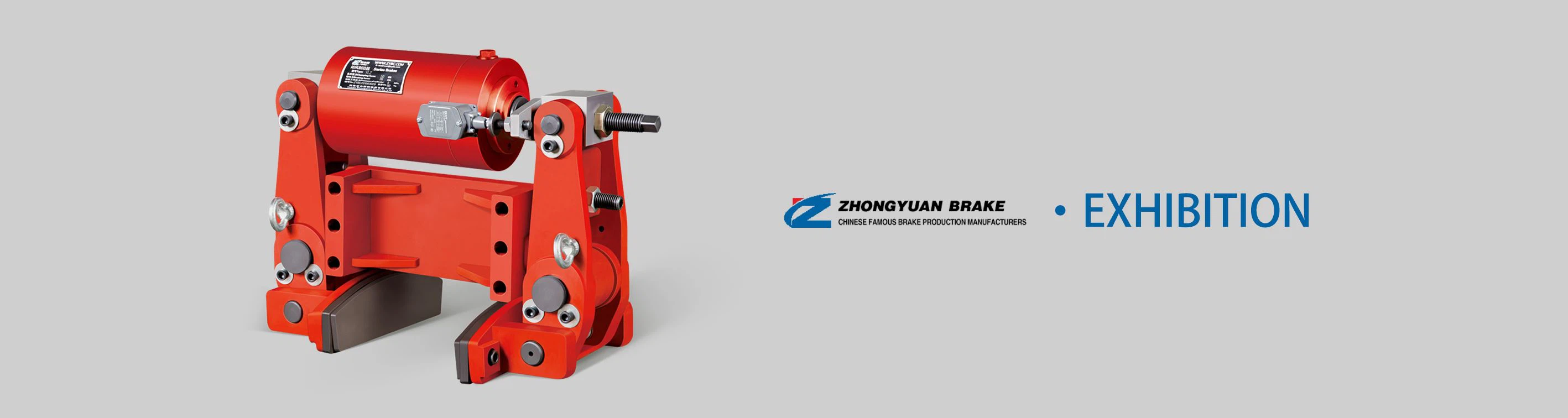
The QWZ5-200/32 series pneumatic drum brake is a normally-closed, spring-applied, air-released braking device tailored for industrial equipment with on-site air supply. It complies with GB6333-86 (connection dimensions and braking torque parameters) and JB/T6406-2006 (technical requirements), and is exclusively matched with the QG32-50 series air cylinder. With stable braking performance, low maintenance, and high action frequency, it is widely used in deceleration and parking braking of cranes, belt conveyors, port handling machinery, and metallurgical equipment in non-explosive environments.
Core Technical Specifications
| Parameter | Standard Value | Notes |
|---|---|---|
| Rated Drum Diameter | 200 mm | Matches medium-load equipment drum specifications |
| Rated Braking Torque | 140–280 N·m | Adjustable via spring preload; complies with GB6333-86 |
| Matching Air Cylinder Model | QG32-50 | Action pressure 0.5–0.7 MPa; ensures sensitive release |
| Brake Type | Normally-closed (spring braking, air release) | Fail-safe: automatic braking on air pressure loss |
| Brake Shoe Clearance | Automatically balanced (no manual adjustment) | Maintained by interlocking clearance equalization device |
| Friction Lining Material | Optional (semi-metallic non-asbestos hard/semi-hard, non-asbestos soft) | Card-mounted integral structure; friction coefficient ≥0.35 |
| Working Air Pressure | 0.5–0.7 MPa | Compatible with standard industrial air supply systems |
| Protection Class | IP54 | Dustproof and water-resistant; adaptable to workshop humidity (≤90%) |
| Working Conditions | - Ambient Temperature: -25℃~+50℃- Duty Cycle: S3-60% (intermittent, 1200 cycles/hour) or S1 (continuous)- Altitude: ≤2000m | No flammable, explosive, or corrosive gases |
| Key Installation Dimensions (mm) | Drum diameter: 200; Mounting center distance: 140; Overall length: 500 | Standardized per GB6333-86 for universal mounting |
| Weight (w/o Air Cylinder) | ~32 kg | Compact structure for space-constrained installations |
Key Structural & Functional Features
Fail-Safe Normally-Closed DesignAdopts the core logic of "spring braking + air release" (Summaries 2, 4). When air pressure is lost (e.g., air supply failure), high-strength braking springs drive the brake shoes to clamp the 200 mm drum instantly, generating 140–280 N·m of braking torque to prevent equipment slipping or runaway. When air is supplied (0.5–0.7 MPa), the QG32-50 cylinder pushes the brake arms to overcome spring force, separating the shoes from the drum for smooth equipment operation.
Interlocking Clearance Equalization & Automatic Shoe AlignmentEquipped with an interlocking clearance equalization device that dynamically adjusts the retraction distance of both brake shoes, ensuring consistent clearance on both sides (0.8–1.2 mm) without manual intervention. This completely eliminates the phenomenon of one brake pad "floating and sticking" to the drum due to uneven clearance, reducing abnormal wear of linings and drums (Summaries 1, 3). The automatic shoe alignment device also allows the shoes to adapt to minor drum runout, ensuring uniform contact and stable braking torque.
Low-Maintenance Self-Lubricating HingesAll main swing hinges are fitted with self-lubricating alloy bearings. During operation, the bearings form a stable oil film to reduce friction and wear, eliminating the need for regular grease filling (Summaries 1, 2). This not only improves transmission efficiency (≥95%) but also extends the hinge service life to ≥5 years under standard working conditions, lowering maintenance workload.
Quick-Change Card-Mounted Friction LiningsThe friction linings adopt a card-mounted integral molding structure (Summaries 2, 4). Replacement only requires unlocking the lining clamp, removing the old lining, and inserting a new one-no need to disassemble the brake arms or cylinder. The entire process takes ≤8 minutes, which is 60% faster than traditional bolted linings, minimizing equipment downtime. Multiple lining materials are available: hard linings for high-frequency braking (e.g., port conveyors), soft linings for low-noise requirements (e.g., workshop cranes), all meeting non-asbestos environmental standards.
Intuitive Braking Torque AdjustmentThe braking springs are housed in a dedicated square tube with a torque scale on the side (Summary 2). Operators can directly observe the spring compression length to read the corresponding braking torque (e.g., 20 mm compression = 200 N·m torque), eliminating the need for complex torque testing tools and simplifying on-site adjustment.
Working Principle (Pneumatic Release + Spring Braking)
The QWZ5-200/32 operates based on pneumatic-hydraulic coordination, with clear division of labor between the QG32-50 air cylinder and internal mechanical components:
Brake Release (Equipment Operation)When the control system supplies compressed air (0.5–0.7 MPa) to the QG32-50 cylinder, the cylinder's piston rod extends linearly. The rod acts on the brake's lever mechanism, and through force amplification, it overcomes the pre-tightening force of the braking springs. This drives the two brake arms to swing outward, separating the friction linings from the 200 mm-diameter drum (clearance 0.8–1.2 mm). At this point, the brake is fully released, and the equipment can run normally.
Brake Application (Equipment Stop/Emergency)
Normal Stopping: When the equipment needs to stop, the control system reduces the air supply pressure. The braking springs gradually rebound, pulling the brake arms to swing inward. The friction linings make contact with the rotating drum, converting the equipment's kinetic energy into heat (dissipated into the air) through friction. The adjustable torque (140–280 N·m) ensures smooth deceleration without impact.
Emergency Braking: In case of air pressure loss (e.g., air compressor failure), the cylinder's piston rod retracts instantly. The braking springs fully engage, clamping the drum tightly to stop the equipment within ≤0.5 seconds-meeting safety standards for medium-load machinery.
Typical Applications (Aligned with QWZ5 Series Scenarios)
Based on Summaries 1, 2, 4, the QWZ5-200/32 is widely used in industrial environments with on-site air supply:
Crane Mechanisms
Small/medium bridge cranes, gantry cranes, and jib cranes: Provides deceleration and parking braking for the 大车 (longitudinal travel) and trolley (transverse travel) mechanisms. The normally-closed design ensures safe parking even if the air supply is interrupted, and the low-noise soft linings adapt to workshop environments.
Electric hoists and small winches: The compact structure fits into narrow installation spaces, and the quick-change linings reduce maintenance downtime during frequent use.
Belt Conveyors
Horizontal/ inclined belt conveyors for bulk material transport (coal, cement, grain): The stable braking torque prevents material "piling" at the front of the belt during stopping, and the clearance equalization device avoids lining wear caused by belt vibration. For inclined conveyors, it also prevents reverse rotation to avoid material falling.
Workshop assembly line conveyors: The sensitive air release ensures smooth start-stop, protecting fragile materials (e.g., electronic components, glass products) from impact.
Port & Metallurgical Equipment
Small port loaders and container stacking auxiliary machinery: Adapts to dusty port environments (IP54 protection) and handles high-frequency start-stop cycles (1200 cycles/hour) during material loading/unloading.
Metallurgical auxiliary equipment (e.g., blast furnace charging trolleys, small rolling mill feeders): The high-temperature resistant linings (stable at ≤250℃) withstand heat from the production environment, and the self-lubricating hinges resist dust interference.