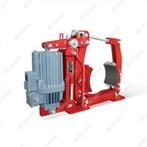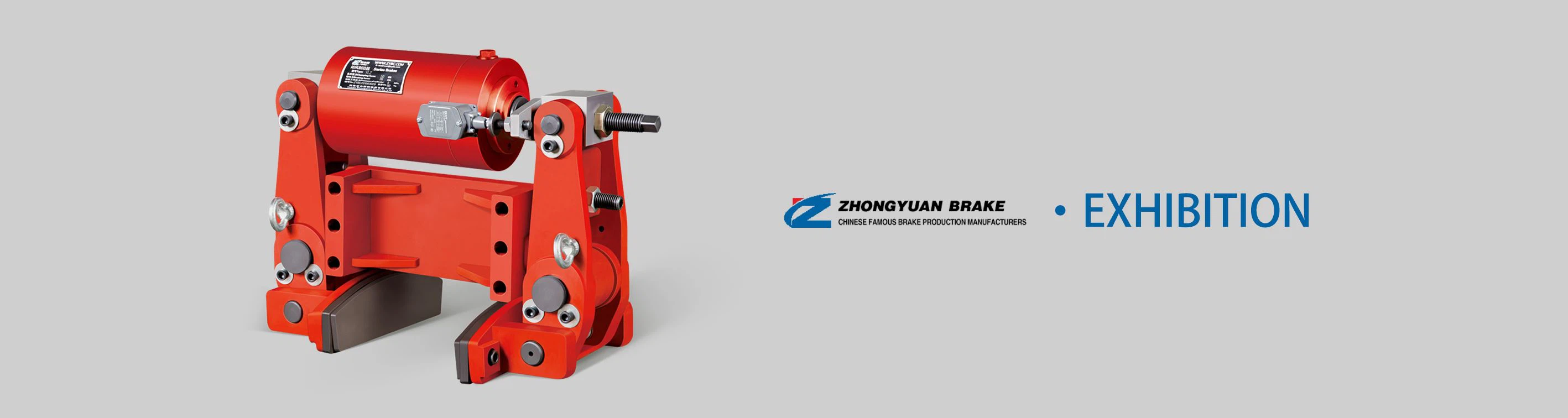
When the electro-hydraulic brake is powered on, the iron core of the electromagnetic brake release attracts the armature to press against the push rod, and the push rod pushes the left brake arm to swing to the left, and the main spring is compressed. At the same time, the pressure-relieving auxiliary spring pushes the right brake arm to the right, and the two brake arms drive the brake shoe to separate from the brake wheel, and the mechanism can move. When the power supply is cut off, the iron core loses its magnetism and the attractive force to the armature is eliminated, thus releasing the pressure of the armature on the push rod. Under the action of the main spring tension, the two brake arms retract inward together, driving the brake pads to hold the brake wheel to generate braking torque. At the same time, the auxiliary spring is compressed. The braking torque is determined by the force of the main spring, and the auxiliary spring ensures the gap between the loosening. The braking performance of the block brake is largely determined by the performance of the brake release.