
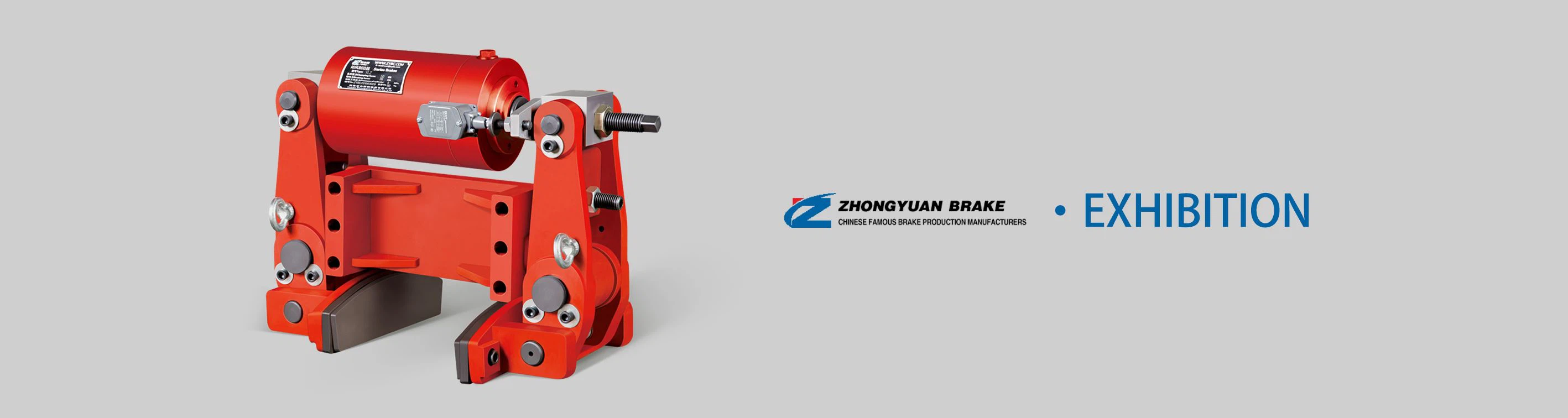
🛠️ Product Overview: TYW-500 Series Foot-Operated Hydraulic Drum Brake
The TYW-500 is a Hydraulic Drum Brake system where the input force is generated by an operator pressing a foot pedal. It converts the mechanical force of the foot into hydraulic pressure, which then pushes the brake shoes against the internal surface of the drum to stop or hold a load.
🔤 Model Decoding
T: Hydraulic (Tuó / Tuo)
Y: Foot Pedal / Foot Operated (Jiao / Jiao)
W: Band Brake or Drum Brake (Dai / Dai)
500: Indicates the diameter of the brake drum (approximately 500 mm).
📋 Key Specifications
表格
| Parameter | Typical Specification | Notes |
|---|---|---|
| Model | TYW-500 | Heavy-duty industrial brake. |
| Actuation Method | Foot Pedal (Mechanical to Hydraulic) | Manual operation; no electricity required. |
| Brake Drum Diameter | 500 mm | Large diameter for high friction surface area. |
| Braking Torque | High | Suitable for heavy loads due to the large drum size. |
| Connection | Flange or Foot Mounting | Designed to be installed on machinery frames. |
✨ Key Features
Foot Pedal Control (Manual Operation):
Unlike the electromagnetic brakes (MW/DCPZ) that are electrically controlled, the TYW series relies on an operator. This makes it ideal for applications where precise human control is needed or where electrical power is unreliable.
Hydraulic Transmission:
The foot pedal acts as a master cylinder. When pressed, it pressurizes hydraulic fluid, which transmits the force to the slave cylinder (actuator) on the brake. This allows for smooth, powerful braking with minimal physical effort from the operator.
High Torque & Safety:
The 500mm drum size provides a large contact area for the brake shoes, generating significant friction and stopping power. It is often used as a safety or emergency brake in manual machinery.
Reliable Sealing:
The hydraulic components are designed to be leak-proof and dust-proof, making them suitable for harsh industrial environments (e.g., construction sites, workshops with metal shavings).
Adjustable Clearance:
The brake shoe clearance is manually adjustable to compensate for wear, ensuring consistent pedal feel and braking performance over time.
🏭 Typical Applications
This brake is commonly found in machinery that requires direct operator intervention for stopping:
Construction Hoists & Winches: For manually lowering or stopping loads.
Testing Benches: For applying a load or stopping a test motor.
Small Cranes & Port Equipment: Auxiliary braking systems.
Industrial Vehicles: (In specific retrofit applications).
Metallurgical Machinery: Where electrical interference is a concern.
💡 Usage Notes
Maintenance: Requires periodic checking of hydraulic fluid levels and brake shoe wear.
Environment: While robust, the hydraulic seals can be sensitive to extreme cold (fluid viscosity) or extreme heat (fluid boiling).
Safety: Since it is manually operated, the stopping force is dependent on the operator's reaction time and physical input.


