
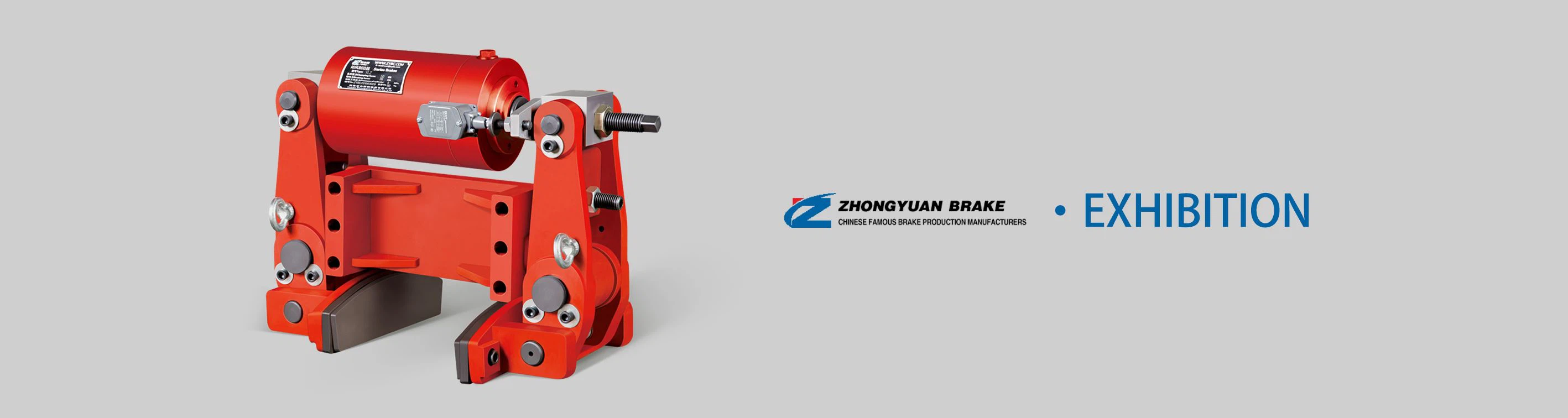
🛠️ Product Overview: TYWZ2-200 Series Foot Operated Hydraulic Drum Brake
The TYWZ2-200 is a Fail-Safe, Foot-Operated Hydraulic Drum Brake. Unlike standard manual brakes that require constant pressure to hold, the "Z2" designation typically indicates a specific structural improvement, often involving a self-locking or retention mechanism.
🔤 Model Decoding
T: Hydraulic (Tuó)
Y: Foot Pedal / Foot Operated (Jiao)
W: Band/Draped (Dai) / Drum
Z: Brake Shoe (Zha) / Locking Type
2: Design Variant / Second Generation
200: Brake Wheel Diameter (Approximately 200 mm).
📋 Key Specifications
表格
| Parameter | Typical Specification | Notes |
|---|---|---|
| Model | TYWZ2-200 | Compact hydraulic drum brake. |
| Actuation Method | Foot Pedal Release | Pressing the pedal releases the brake (spring applies it). |
| Brake Wheel Diameter | 200 mm | Standard size for medium-duty applications. |
| Braking Torque | Medium (Varies by spring force) | Suitable for gear motors and winches. |
| Mounting Style | B5 / B3 Flange Mount or Foot Mount | Designed to mount directly onto gearboxes or frames. |
✨ Key Features
Fail-Safe (Normally Closed) Design:
This is the defining feature of the TYWZ series. The brake is applied by powerful springs and released by pressing the foot pedal. If the operator releases the pedal, the brake engages automatically. This is crucial for holding loads and preventing accidents during power or hydraulic failure.
Foot Pedal Control:
It utilizes a lever and master cylinder system. When the operator presses the pedal, hydraulic pressure is generated to overcome the spring force and retract the brake shoes.
"Z2" Self-Locking Mechanism:
The "Z2" variant often features a ratchet or latch mechanism on the foot pedal. This allows the operator to "lock" the pedal in the depressed (brake released) position for continuous operation without holding the pedal down manually, and release it instantly for braking.
Low Noise & Smooth Operation:
The hydraulic transmission provides a smooth, cushioned feel compared to purely mechanical linkages, reducing operator fatigue and impact shock on the machinery.
Adjustable Torque:
The braking torque can usually be adjusted by changing the tension of the main springs, allowing the user to fine-tune the stopping power for different loads.
🏭 Typical Applications
The TYWZ2-200 is commonly used in applications requiring manual control with automatic safety holding:
Construction Hoists & Winches: For manually controlling the lowering of building materials.
Small Cranes & Jib Cranes: Auxiliary or main brakes where the operator needs hands-free control.
Cable Reels & Winders: To maintain tension on the cable.
Test Benches: For applying a load to engines or motors.
Mining Equipment: Small-scale transport or lifting devices.
💡 Usage Environment
Temperature: -20°C to +50°C.
Environment: Suitable for outdoor use but should be protected from direct heavy rain to prevent corrosion of the hydraulic fittings.
Maintenance: Requires periodic checking of hydraulic fluid and brake pad wear. The self-lubricating bushings in the linkage require minimal maintenance.
TWZ-200 series foot operated hydraulic drum brakes
Based on the search results and the context of your previous inquiries regarding industrial brakes, there appears to be a classification discrepancy in the name you provided.
The TWZ-200 series is primarily documented as a Foot-Operated Block Brake (or Lever Brake), not a hydraulic drum brake. While "drum brake" is sometimes used colloquially, in industrial mechanics, the TWZ series specifically refers to a mechanical/hydraulic lever-type brake that acts on a brake wheel, distinct from the "YWZ" series which are typically shoe-type drum brakes.
Here is the detailed technical description for the TWZ-200 Series, based on the available data:
🛠️ Product Overview: TWZ-200 Series Foot-Operated Brake
The TWZ-200 is a Normally Open (常开), Foot-Treadle Operated Brake. It is designed for manual control, where the operator uses their foot to apply pressure to a treadle (pedal), which mechanically or hydraulically opens the brake jaws to allow motion. When the foot pressure is released, the brake automatically closes to stop or hold the load.23
🔤 Model Decoding
T: Treadle / Foot Operated (Jiao 脚)
W: Lever / Linkage (Gan 杆)
Z: Brake / Shoe (Zha 闸)
200: Frame Size / Brake Wheel Diameter (Approx. 200 mm).13
📋 Key Specifications
Based on the technical data found:
表格
| Parameter | Specification | Notes |
|---|---|---|
| Model | TWZ-200 | Part of the TWZ (Foot Lever) series. |
| Actuation Method | Foot Pedal (Mechanical/Hydraulic) | Human power applied via lever mechanism. |
| Brake Wheel Diameter | 200 mm | Fits a 200mm diameter brake wheel. |
| Max. Braking Torque | 230 N·m | Rated stopping power. |
| Max. Operating Force | 320 N | Force required on the pedal to actuate. |
| Weight | 23 kg | Net weight of the assembly. |
✨ Key Features
Normally Open (NO) Design:
This brake is "Normally Open," meaning it stays open (released) when the pedal is in the "down" position and closes (applies) when the pedal is released. This is the opposite of the fail-safe TYWZ hydraulic brakes.
Equal Retreat Device:
It features a linkage-type equal retreat mechanism. This ensures that the clearance (distance) between the brake linings and the brake wheel is always equal on both sides, preventing one-sided wear or dragging.26
Self-Lubricating Bushings:
The main pivot points are equipped with self-lubricating bearings. This reduces friction, increases transmission efficiency, and eliminates the need for frequent greasing during maintenance.23
Tool-Free Lining Replacement:
The brake linings (friction pads) use a clip-in or card-type structure. This allows for very quick replacement without needing to disassemble the entire brake mechanism, minimizing machine downtime.23
Manual Operation:
It does not rely on electricity or hydraulics to function; it relies solely on the operator's foot force. This makes it simple, robust, and suitable for environments where power sources are limited.
🏭 Typical Applications
The TWZ-200 is commonly used in:
Small & Medium Cranes: For controlling the travel mechanisms of overhead cranes.
Conveyors: Manual stopping/starting points.
Mining & Quarry Equipment: Where simple, manual control is preferred.
Workshop Machinery: Presses, shears, or winding machines.
💡 Usage Environment
Temperature: -20°C to +50°C.
Environment: Indoor or outdoor (protected). It should be kept free of explosive gases and corrosive vapors.1


