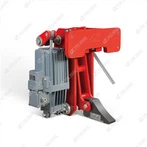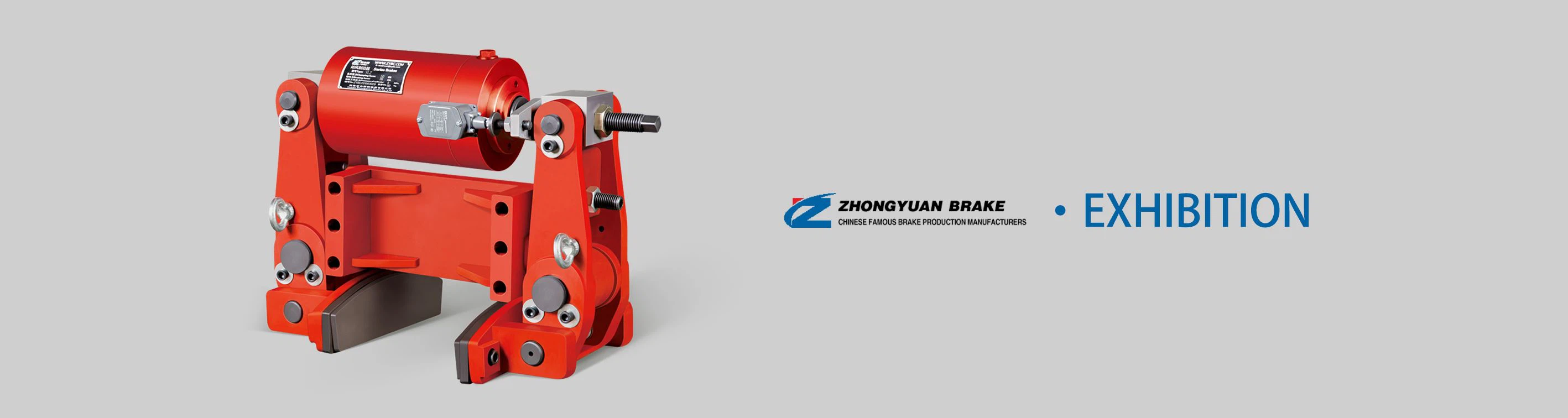
1. Electro-Hydraulic Thruster Malfunctions (ED / YT1 Thruster)
Built-in motor coil of the thruster is burnt, open-circuited or short-circuited; no hydraulic power output.
Internal hydraulic oil level is too low, or oil is deteriorated / mixed with air, leading to insufficient thrust stroke.
Sealing rings, piston oil seals inside the thruster are damaged, causing serious internal oil leakage and loss of output force.
The impeller inside the thruster pump is stuck by metal debris, rust or sludge, unable to build hydraulic pressure.
Input voltage is under-rated, wiring terminals are loose, contactor contacts are ablated, failing to supply full power to the thruster.
Thruster tilt angle exceeds the allowed ±15°, resulting in poor oil lubrication and incomplete piston extension.
2. Mechanical Linkage & Adjustment Abnormalities
The connecting pull rod between thruster and brake swing arm is too short; insufficient stroke cannot pull the brake arms open.
Lock nuts on the pull rod slip and shift, reducing effective working stroke.
The equal-clearance balancing linkage mechanism is jammed by dust, rust or foreign metal chips, restricting swing arm movement.
Hinge pins and self-lubricating bushings of brake arms are rusted, dry or seized, creating excessive movement resistance.
Pre-compression of the main braking spring is over-adjusted; spring tension exceeds the maximum thrust of the electro-hydraulic thruster.
Manual emergency release lever is not fully reset, mechanically locking the brake in closed state.
3. Friction Lining & Brake Drum Interference
Single-side clearance between friction lining and brake drum is adjusted too small; linings cling tightly to the drum surface.
Brake drum is deformed, warped or axially offset, causing persistent friction blockage even after the thruster extends fully.
Debris, sand, metal filings stuck between the brake drum and friction linings, blocking separation of the shoe assemblies.
Friction linings swell due to oil contamination, narrowing the gap and sticking to the drum.
4. Assembly & External Obstacle Failures
The brake base mounting bolts are loose, leading to frame offset and uneven shoe clamping resistance.
Foreign objects collide with the brake arm and limit its outward swing stroke.
Long-term heavy dust and corrosion cause overall jamming of the entire brake linkage system without regular maintenance.