
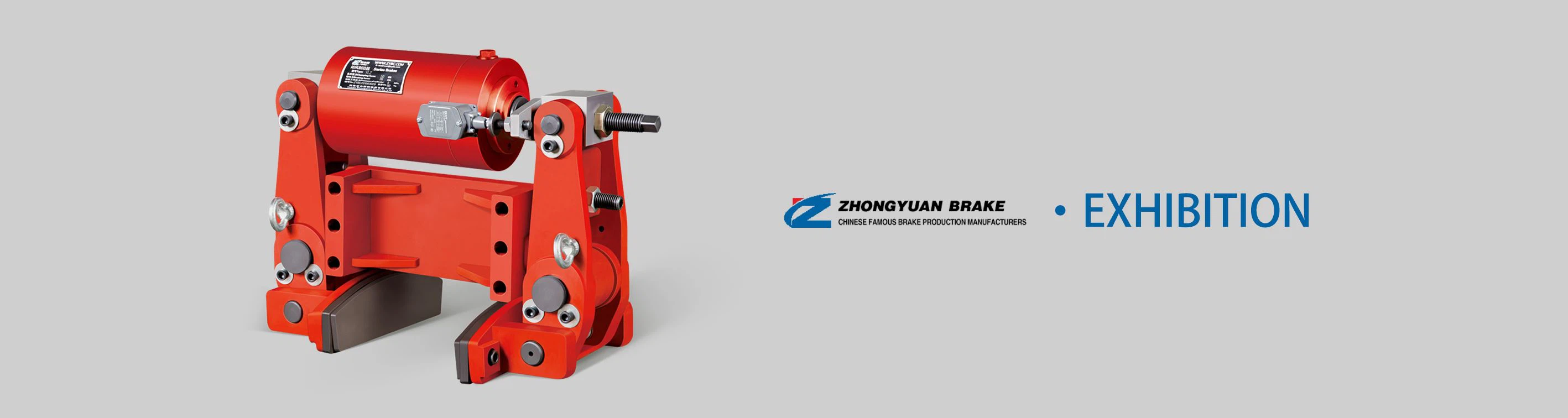
1. Model Interpretation & Core Function
The YPZ2-630×30II/E121-L-MSK1's model code directly reflects its structural configuration, performance parameters, and accessory configuration, enabling quick equipment matching:
| Model Segment | Meaning |
|---|---|
| YPZ2 | 2nd-Generation Upgraded Electro-Hydraulic Disc Brake Series (enhanced rigidity, intelligent compatibility) |
| 630 | Compatible brake disc diameter: 630 mm (optimized for high torque and heat dissipation) |
| 30 | Compatible brake disc thickness: 30 mm (high-strength alloy steel, wear-resistant and anti-deformation) |
| II | Dual-caliper configuration (two symmetric calipers for balanced braking force) |
| E121 | Matched electro-hydraulic thruster model (E-series, 121 denotes rated thrust 1210 N and power parameters) |
| L | Mounting orientation: Left-mounted (compatible with machinery shaft layout) |
| MSK1 | Integrated accessory kit: Manual release (M) + Safety interlock (S) + Quick-install bracket (K1) |
Its core functions target heavy-duty, safety-critical scenarios requiring ultra-high reliability and precise control:
High-Torque Braking: Delivers stable braking torque (1200–1800 kN·m) to decelerate or stop large rotating machinery smoothly, avoiding structural shock from abrupt stops.
Emergency Stopping: Rapidly engages in power loss, thruster failure, or overspeed (≥110% of rated speed) to prevent machinery runaway and catastrophic accidents.
Static Load Holding: Secures extra-heavy loads (e.g., 150-ton containers, large ore batches) during downtime, maintenance, or power outages-ensuring zero accidental movement.
Intelligent Safety Monitoring: Compatible with industrial control systems via integrated sensors, enabling real-time status tracking and predictive maintenance.
2. Working Principle
The YPZ2-630×30II/E121-L-MSK1 operates on a fail-safe principle (spring force for braking, electro-hydraulic thrust for release), with dual-caliper synchronization for balanced torque output. Its working cycle includes three key states:
2.1 Brake Engagement (Safety State: Default)
When the machinery is stationary, in emergency, or powered off, internal high-tension disc springs (60Si2MnA alloy steel) in both calipers expand outward.
The spring force (total 600–800 kN) pushes the dual calipers' dual-sided friction pads to clamp symmetrically against the rotating brake disc (630 mm diameter, 30 mm thickness).
Friction between the pads and disc generates stable braking torque (1200–1800 kN·m), resisting the disc's rotation to stop the connected machinery shaft or hold it stationary.
2.2 Brake Release (Operating State)
When the machinery needs to run, the matched E121 electro-hydraulic thruster is activated. It converts electrical energy into hydraulic pressure (20–28 MPa), generating linear thrust (1210 N) to overcome the disc spring force.
The thrust is transmitted via a synchronous linkage mechanism, retracting the pistons and friction pads of both calipers simultaneously. A precise 0.5–1.2 mm clearance is created between the pads and disc.
The brake disc rotates freely with the machinery shaft, enabling normal operation (e.g., crane hoisting, conveyor movement) without drag friction.
2.3 Emergency Response (Fault State)
In case of power loss, hydraulic leakage, or emergency shutdown signals, the E121 thruster's pressure dissipates instantly.
The disc springs rebound within ≤0.2 seconds, driving both calipers to re-clamp the disc synchronously-engaging full braking torque to stop the machinery immediately and eliminate safety hazards.


