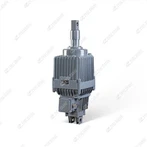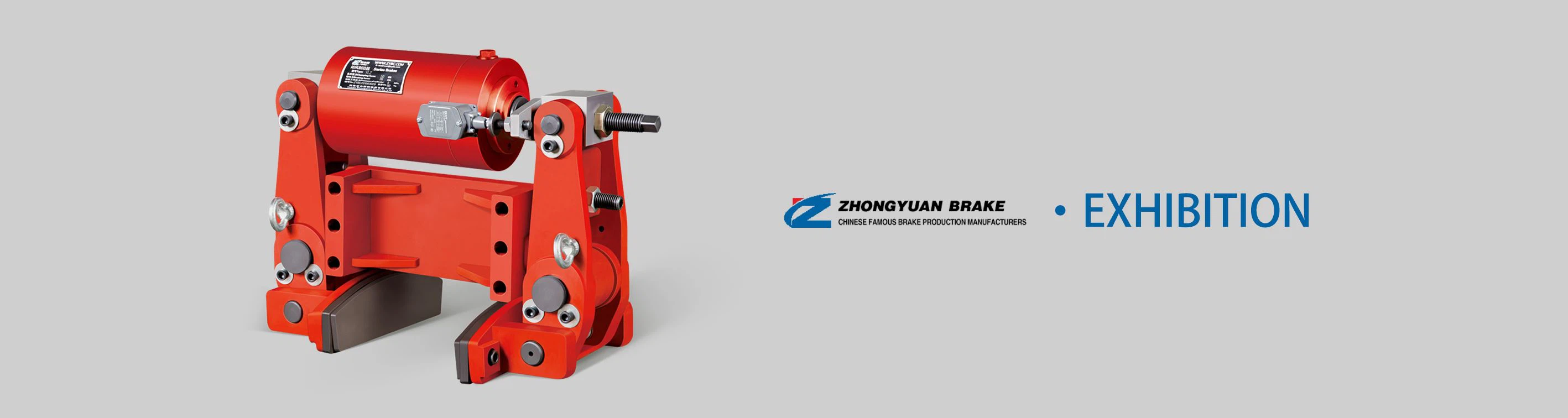
The YW-E400/E121 Two-Step Series Electro-hydraulic Drum Brake is a specialized braking device designed for applications requiring staged or controlled deceleration. Unlike standard single-action brakes, the "Two-Step" mechanism allows for two distinct levels of braking force or two stages of release, enhancing control in complex lifting or conveying operations.
Here is a detailed breakdown of this specific model:
1. Core Structure & Model Decoding
The model name indicates a combination of the brake frame and the specific drive mechanism designed for two-stage operation.
YW: Series designation for Electric Hydraulic Drum Brakes.
E400: Brake frame size. This indicates the approximate diameter of the brake wheel it is designed to fit (400 mm).
E121: Drive mechanism code. This specifies the use of an Ed121 series electric hydraulic pusher, modified or controlled to achieve the "Two-Step" function.
2. Working Principle: The "Two-Step" Function
This is the defining feature of this brake. It does not simply "open" or "close" in one motion. Instead, it operates in two phases:
Mode A: Two-Stage Release (Soft Start):
Step 1 (Partial Release): When the pusher is energized, it may first release the brake partially (or engage a secondary spring mechanism), allowing a controlled slip or slow movement.
Step 2 (Full Release): A subsequent signal or increased power fully extends the pusher, completely releasing the brake for normal running speed.
Mode B: Two-Stage Braking (Controlled Stop):
Step 1 (Pre-Braking): Upon power cut or signal, the pusher retracts slightly, applying initial friction to begin deceleration smoothly.
Step 2 (Full Lock): The spring force fully engages, locking the brake drum securely.
Hydraulic Control: Achieving these steps often requires a specialized hydraulic control valve block (not just a simple on/off solenoid) to manage the oil pressure in the Ed121 cylinder.
3. Key Technical Specifications
| Parameter | Specification | Notes |
|---|---|---|
| Brake Wheel Diameter | 400 mm | Standard drum size for E400 frame. |
| Drive Unit | Ed121 | Electro-hydraulic pusher (Typically Ed121/6). |
| Rated Thrust | 1200 N | Standard thrust for Ed121 series. |
| Stroke | 60 mm | Standard stroke allowing for two-step positioning. |
| Braking Torque | Adjustable | Depends on spring force and friction material. |
| Control | Hydraulic/Electric | Requires sequenced control signals. |
4. Key Features & Advantages
Impact Reduction: The two-step action significantly reduces mechanical shock to the gearbox and drive train during startup and stopping.
Load Holding: Ideal for hoisting mechanisms where a "soft catch" is needed to prevent load sway or shock loading on the wire rope.
Precise Positioning: Allows for finer control over the load, enabling inching or precise placement operations.
Fail-Safe Backup: Even with the two-step function, the base design remains spring-applied. If power fails completely, it defaults to the fully applied (braked) position for safety.
5. Typical Applications
The YW-E400/E121 is used in scenarios where standard brakes cause too much jerk or lack control:
Mine Winding Equipment: For smooth acceleration/deceleration of mine skips or cages.
Heavy-Duty Winches: Used in shipyards or construction for controlled lowering of heavy loads.
Inclined Conveyors: Prevents rollback and controls the stopping distance on steep belts.
Metallurgical Cranes: Handling molten metal or hot steel, where sudden stops could be catastrophic.
6. Maintenance & Operation
Hydraulic Fluid: Ensure the Ed121 pusher is filled with the correct hydraulic oil (usually DB-25). Contamination can hinder the precise movement required for the two-step function.
Valve Maintenance: If the unit is equipped with flow control or delay valves (H/S valves), inspect these regularly to ensure the timing of the two steps remains accurate.
Spring Adjustment: The balance between the two steps often relies on precise spring tension. Adjust only according to the manufacturer's manual.