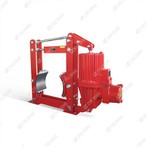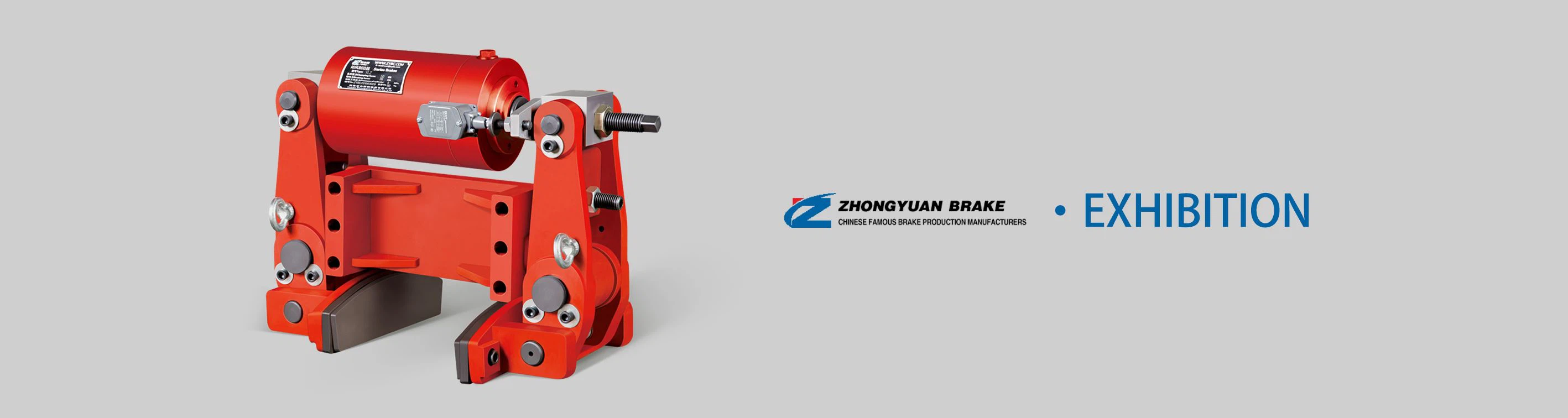
Installation and Use of the YWZ4-800/180 Electro-hydraulic Drum Brake
1. System Overview
The YWZ4-800/180 is a spring-applied, hydraulically released (SAHR) external drum brake system. It consists of two main components that are installed separately and connected via hydraulic lines:
YWZ4-800 Brake Caliper: The mechanical assembly that applies braking force to the brake drum.
Hydraulic Power Unit (Thruster/Actuator): Typically a unit like the YT1-180Z or similar, which provides the hydraulic pressure to release the brake. The /180in the designation often refers to the matching thruster's thrust class (e.g., 1800 N).
2. Installation
Critical Pre-Installation Safety Precautions:
De-energize & Lock Out: Ensure all power sources (electrical and hydraulic) to the entire system are isolated and locked out/tagged out (LOTO).
Qualified Personnel: Installation must be performed by qualified technicians following all applicable mechanical, hydraulic, and safety codes.
Inspection: Before installation, inspect all components (caliper, thruster, hoses, drum) for shipping damage. Clean the brake drum surface thoroughly.
Installation Steps:
A. Mounting the Brake Caliper (YWZ4-800):
Drum Preparation: Verify the brake drum diameter is 800 mm. The drum's running surface must be clean, concentric, and within specified tolerances for roundness and surface finish.
Support Structure: Mount the brake caliper's supporting baseplate or bracket onto a rigid, stable structure (e.g., machine bed, crane girder). The mounting surface must be flat and able to withstand the high reaction forces during braking.
Positioning & Alignment: This is the most critical step.
Center Height: Align the centerline of the brake caliper's pivot pins with the centerline of the brake drum.
Symmetry: Position the caliper so that the two brake shoes are perfectly symmetrical relative to the vertical centerline of the drum.
Clearance (Air Gap): Initially set the shoes to have a uniform clearance (e.g., 1.0-1.5mm per side) from the drum along their entire arc length. Use the adjustment mechanism (eccentric pins or handwheel) provided on the caliper. Measure with a feeler gauge at multiple points.
Securing: Tighten all mounting bolts and foundation bolts gradually and evenly in a star pattern to the manufacturer's specified torque. Do not finalize torque until alignment is confirmed.
B. Installing the Hydraulic Power Unit (Thruster):
Location: Mount the thruster (e.g., YT1-180Z) in a designated location, preferably on a stable surface near the brake. Ensure there is adequate space for maintenance and heat dissipation. The unit is often mounted separately and connected via pipes/hoses.
Connection to Caliper: Connect the thruster's push rod to the brake caliper's release lever using the provided clevis pin and cotter pins. Ensure the connection is free but without excessive play. The lever ratio is critical for generating the correct braking force.
Hydraulic System:
If not pre-filled, fill the thruster with the correct type and volume of hydraulic fluid (e.g., specified ISO VG hydraulic oil) as per the manual.
Bleeding: It is absolutely essential to bleed all air from the hydraulic system (thruster and connecting lines). Air in the system causes spongy action, delayed response, and reduced force. Follow the manufacturer's bleeding procedure meticulously.
C. Electrical Connection:
Connect the thruster motor to the power supply (e.g., 3-phase 400V, 50Hz) according to the wiring diagram. Ensure correct phase sequence.
Connect the control circuit (from the brake release contactor) to the motor leads. Include proper overcurrent protection (fuses/circuit breaker) and control elements as per the electrical schematic.
3. Adjustment, Use, and Operation
A. Final Adjustment & Running-In:
Initial Stroke Adjustment: With the thruster de-energized (brake applied), check that the brake shoes are firmly and fully contacting the drum. When the thruster is energized (brake released), verify the push rod's stroke is sufficient to create the final, uniform air gap (typically specified, e.g., 1.5-2.0mm per side) along the entire shoe length. Adjust the lever linkage or thruster stroke limiter if necessary.
Torque Adjustment: The braking force is adjusted via the main compression spring on the caliper or the leverage system. Caution: Adjust only according to the manual to ensure the required braking torque is achieved without over-stressing components. The thruster must generate enough force to reliably compress this spring.
Shoe Alignment (Toe-In): For optimal performance and even wear, the shoes should have a slight "toe-in" (the leading edge of the shoe contacts the drum slightly before the trailing edge). This is often set via the eccentric pivot pins during initial alignment.
Running-In: After installation, perform a series of gentle, low-energy stops to properly seat (break-in) the brake linings against the drum surface. This improves performance and longevity.
B. Normal Operation Cycle:
Release: To start the machine, the thruster motor is energized. It builds hydraulic pressure, extending the push rod. This rotates the brake lever, compressing the main brake spring and retracting the shoes from the drum, releasing the brake.
Running: The machine can now operate freely. The brake remains released as long as the thruster is powered (some systems may have a holding valve).
Application (Fail-Safe): To stop, the thruster motor is de-energized. Hydraulic pressure drops, and the powerful brake spring immediately forces the shoes against the drum, applying the brake. This is automatic and occurs on power failure, ensuring fail-safe operation.
C. Critical Usage and Maintenance Notes:
Fail-Safe Device: This is a safety-critical holding brake. Its primary function is to stop and hold a load. It is not designed for frequent, dynamic stopping (duty cycle limits apply).
Monitoring: Regularly check and adjust the air gap as the brake linings wear. Excessive wear leads to reduced lever travel and insufficient release.
Lining Wear: Inspect lining thickness periodically. Replace linings in pairs (both shoes) when worn to the minimum thickness specified.
Hydraulic Fluid: Check for fluid leaks. Maintain the correct fluid level in the thruster. Change fluid at intervals recommended by the thruster manufacturer.
Manual Release: Most thrusters have a manual release device (screw or lever) for maintenance. Use it to release the brake without power. Always re-engage it before operation.
Lubrication: Regularly lubricate all pivot pins, bushings, and the lever mechanism as specified in the manual, using the recommended grease. Keep grease off the drum and linings.
Summary: Proper installation of the YWZ4-800/180 system hinges on precise mechanical alignment of the caliper to the 800mm drum and correct hydraulic system setup (bleeding). Its operation relies on the fail-safe spring-apply/hydraulic-release principle. Regular maintenance focused on air gap adjustment, lining wear, and lubrication is essential for safety, reliability, and long service life. Always consult and follow the official manufacturer's manual for specific torque values, clearances, and procedures.