
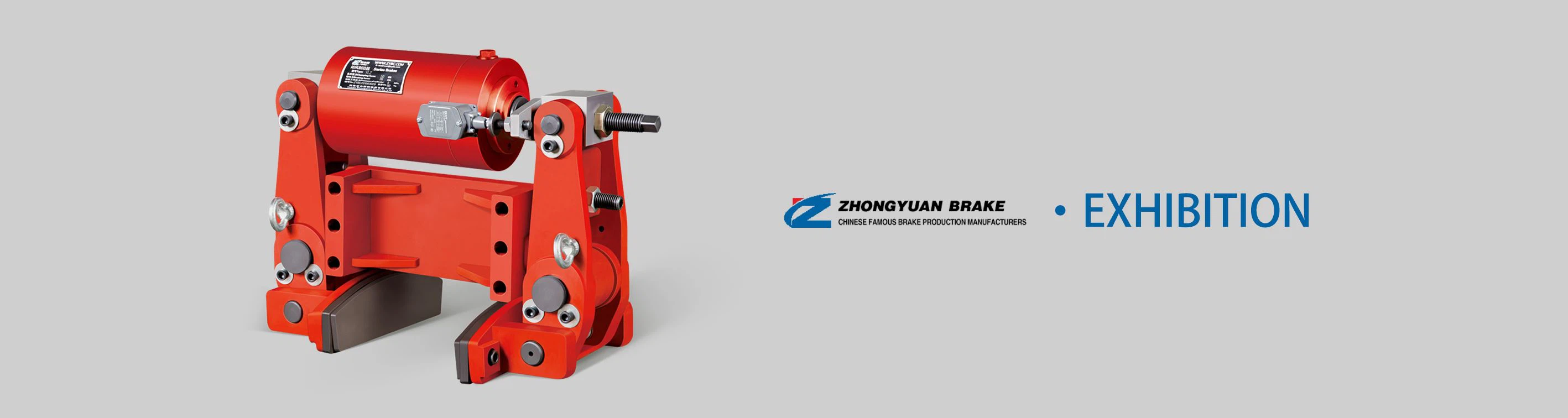
CQP12.7-A-L-E1 is a modified model of the CQP12.7-A pneumatic caliper disc brake. The suffix "L" may stand for left-hand mounting of the air bag, and "E1" represents an equipped mechanical brake release display device. It inherits the core advantages of the CQP12.7 series while having the advantage of intuitive working status monitoring. The following are its detailed advantages and usage instructions:
Core Advantages
Efficient and Adjustable Braking Performance: It adopts a pneumatic braking and spring release mode. When the air supply is cut off, the piston rod pushes the brake arm quickly, enabling the friction blocks to close rapidly, which results in sensitive braking response. Moreover, it supports stepless adjustment of braking time-by installing a speed control valve in the air supply line, it can adapt to the frequent braking requirements of different equipment. Its braking torque can be flexibly adjusted according to working conditions, and it is compatible with multiple disc diameters, which can meet the braking and deceleration needs of mechanisms under various load conditions.
Convenient Maintenance and Environmental Friendliness: The brake pad adopts a pressure spring clamping structure. When the pad is worn, it can be replaced quickly without complicated disassembly. Meanwhile, the non-asbestos brake pad is environmentally friendly, which complies with modern industrial environmental protection standards and also has good wear resistance to reduce replacement frequency. Its air bag is made of imported aluminum alloy, which features excellent sealing performance and stable performance. In addition, the overall structure of the brake is simple and compact, with small size and light weight. The weight of the basic CQP12.7-A model is only 23kg, making installation, debugging and later inspection very convenient.
Reliable Operation and Intuitive Status Monitoring: The "E1" suffix indicates that the brake is equipped with a mechanical brake release display device. Operators can directly observe whether the brake is in the released state, which avoids safety hazards caused by misjudgment of the working state. Its power source can be connected to the existing air compressor station without the need for an independent power supply system, which not only saves configuration costs but also ensures stable air supply. The key components have good sealing performance, which can effectively prevent the intrusion of external impurities and ensure reliable operation in general industrial environments.
Application and Usage Notes
Typical Application Scenarios: It is widely used for braking and deceleration of various mechanisms in lifting, transportation, metallurgy, mining, port and construction machinery. For example, it can be installed on the operating mechanism of gantry cranes in construction sites and the conveying mechanism of mining belt conveyors. It is also suitable for tension control of cable, papermaking and steel plate machinery, which can ensure the stability of materials or workpieces during transmission and prevent problems such as slipping and deviation.
Key Usage Notes: The working air pressure should be strictly controlled within ≤7bar. The air source must be free of oil, water and other impurities, otherwise the sealing performance and service life of the cylinder and air bag will be affected. The applicable ambient temperature is -5℃ - 40℃. If it is used outdoors where there is rain, snow erosion or corrosive gas, the anti-corrosion type of this model should be selected. Regularly check the wear of the non-asbestos brake pads and the tightness of the air circuit during use. For the mechanical brake release display device marked with "E1", it is necessary to verify its accuracy regularly to ensure that the displayed state is consistent with the actual working state of the brake. When the equipment is out of service for a long time, before restarting, it is necessary to check the flexibility of the spring and the piston rod to avoid brake failure caused by jamming.


