
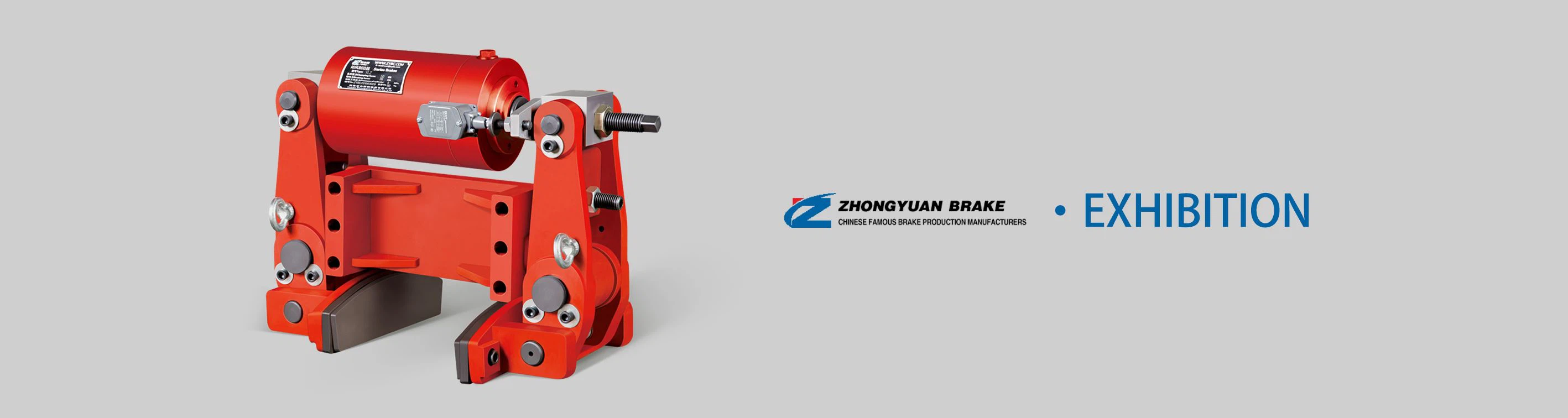
1. Model Interpretation & Core Function
The YWZ4(YT1)-100/18's model code reflects its design and matching components, enabling quick equipment pairing:
| Model Segment | Meaning |
|---|---|
| YWZ4(YT1) | 4th-Generation Drum Brake with matched YT1-type electro-hydraulic thruster (spring-engaged, electro-hydraulic released) |
| 100 | Brake drum diameter: 100 mm (small-sized drum for light loads) |
| 18 | Matched YT1 thruster parameter: 18 denotes rated thrust (180 N) and power rating |
Its core functions target safety and control for light-duty machinery:
Normal Braking: Decelerating or stopping machinery smoothly during routine operation, adapting to intermittent working cycles.
Emergency Stopping: Rapidly engaging in power loss, thruster failure, or overspeed to prevent machinery runaway and potential hazards.
Static Load Holding: Securing light loads (e.g., lifted small parts, conveyor materials) during downtime, maintenance, or power outages.
2. Working Principle
The YWZ4(YT1)-100/18 operates on a fail-safe principle (spring-engaged for braking, electro-hydraulic thrust for release), ensuring safety even if the power or actuation system fails. Its working cycle includes three key states:
2.1 Brake Engagement (Safety State)
When the machinery is stationary, in emergency, or powered off, internal high-tension compression springs expand to push the dual arc-shaped brake shoes outward.
The brake shoes (lined with friction 衬片) press tightly against the inner surface of the rotating brake drum. Friction between the 衬片 and drum generates stable braking torque, stopping the drum or holding it stationary.
2.2 Brake Release (Operating State)
When the machinery needs to run, the matched YT1-18 electro-hydraulic thruster is activated. The thruster converts electrical energy into linear hydraulic thrust (180 N).
The thrust pulls the lever mechanism, compressing the internal springs and retracting the brake shoes from the drum-creating a 0.2–0.4 mm clearance.
The drum rotates freely with the machinery shaft, enabling normal operation (e.g., conveyor movement, winch lifting).
2.3 Emergency Response (Fault State)
In case of power loss, thruster failure, or emergency shutdown, the thruster's thrust dissipates instantly.
The compression springs expand within ≤ 0.5 seconds, driving the brake shoes to clamp the drum-engaging the brake quickly to stop the machinery.


