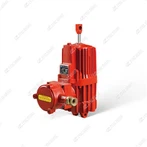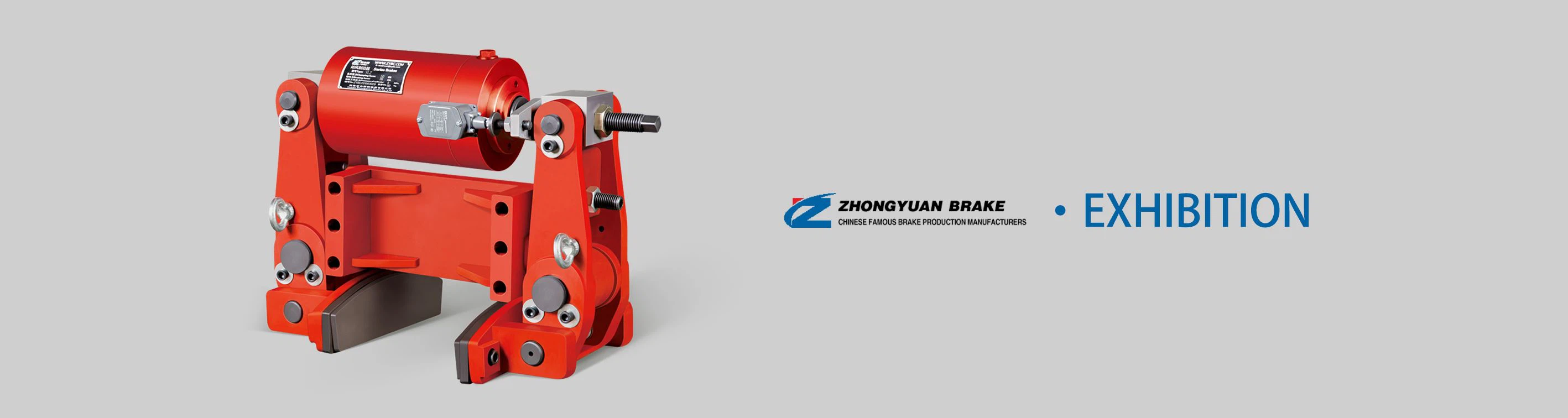
The DLZ Series is a range of industrial-grade power-driven wheel brakes engineered for direct braking control on the wheels of medium-to-heavy duty mobile and fixed machinery-including industrial trucks, mobile cranes, port transporters, construction vehicles, and material-handling equipment. Defined by its versatile power actuation (compatible with electric, hydraulic, or pneumatic systems) and direct wheel-mounted design, this series delivers adjustable braking force, reliable load holding, and adaptive performance to suit diverse operational demands. Its core advantage lies in flexible power compatibility, allowing integration with existing machinery power systems (e.g., hydraulic for construction vehicles, electric for indoor transporters). Covering wheel diameters from 300–1,200mm and torque outputs from 2,000–30,000 N·m, the DLZ Series caters to loads of 20–300 tons, making it suitable for ports, construction sites, warehouses, and mining auxiliary operations. Below is a detailed breakdown of its core attributes, working principle, key features, typical applications, and technical specifications:
1. Series Overview & Core Function
The DLZ Series (D = Direct Wheel-Mounted, L = Load-Adaptive, Z = Power-Driven) is distinguished by its multi-power compatibility and wheel-centric design, setting it apart from single-actuation brakes. Its core functions align with the safety and operational needs of wheeled machinery:
Dynamic Wheel Braking: Decelerating or stopping wheeled equipment (e.g., mobile cranes, industrial trucks) with controlled torque to avoid skidding, load sway, or component damage-critical for navigating tight spaces or uneven terrain.
Static Wheel Holding: Securing machinery in place during downtime, maintenance, or on inclines (e.g., parking construction trucks on slopes, locking port transporter wheels during cargo loading).
Emergency Braking: Automatically engaging in power system faults (e.g., pressure loss, electrical failure) or overspeed to prevent equipment runaway, serving as a safety barrier for high-risk operations.
The series offers three actuation variants to match machinery power sources: DLZ-E (Electric), DLZ-H (Hydraulic), and DLZ-P (Pneumatic), ensuring seamless integration across different industrial environments.
2. Working Principle
The DLZ Series operates on a power-driven clamping principle, where electric, hydraulic, or pneumatic power drives brake pads to clamp onto the wheel rim or a hub-mounted brake disc. While actuation power differs by variant, the core working cycle is consistent:
2.1 1. Brake Release (Normal Operation)
When the machinery is in motion, the control system activates the brake's power unit (electric motor, hydraulic cylinder, or pneumatic cylinder).
The power unit generates force to retract the brake pads, creating a gap (0.4–0.8mm) between the pads and the wheel rim/disc. The wheel rotates freely, enabling normal travel or operation.
2.2 2. Brake Engagement (Controlled Stopping/Holding)
Controlled Stopping: To slow or stop the machinery, the control system reduces power input to the actuation unit. Internal return springs (or reduced pressure/voltage) push the brake pads against the rotating wheel interface.
Torque Generation: Friction between the pads and wheel rim/disc generates braking torque, with force proportional to the power input-allowing smooth, adjustable deceleration (e.g., industrial trucks moving fragile cargo).
Static Holding: For long-term parking or load security, power to the actuation unit is cut off. Return springs (or mechanical locks) keep the pads clamped to the wheel, maintaining torque without consuming energy.
2.3 3. Emergency Braking (Fault Scenarios)
In case of power system failure (e.g., hydraulic leak, pneumatic pressure loss, electrical short) or overspeed (detected by wheel speed sensors), the brake engages instantly.
Backup springs or redundant power reserves (e.g., hydraulic accumulators for DLZ-H) drive the pads against the wheel with maximum force, generating peak torque to stop the wheel within ≤ 1.2 seconds (under rated load)-preventing accidents.
3. Core Structure & Key Components
The DLZ Series features a modular, wheel-adaptive design with shared structural components and variant-specific actuation units:
3.1 Shared Components (Across All Variants)
Wheel Braking Assembly:
Brake Pads: Arc-shaped composite pads (material varies by variant: resin-semi-metallic for DLZ-E/P, ceramic-semi-metallic for DLZ-H) with a friction coefficient (μ ≥ 0.42–0.48) and heat resistance up to 400°C. Pads are bolted to a carrier ring for easy replacement.
Braking Interface: Dual-compatible design for wheel rims (300–1,200mm diameter) or hub-mounted discs (thickness: 15–40mm), adapting to different machinery wheel configurations.
Carrier Ring: High-strength steel ring that distributes clamping force evenly across the wheel interface, avoiding uneven wear and ensuring stable torque output.
Return & Safety Mechanism:
High-Tension Return Springs: Manganese-steel springs that provide fail-safe engagement force when power is cut off, ensuring basic braking capability in all fault scenarios.
Wear Adjusters: Automatic or manual screws that compensate for pad wear, maintaining a consistent brake gap (0.4–0.8mm) and eliminating frequent re-calibration.
Protection Components:
Environmental Housing: Steel or aluminum casing with IP64/IP65 protection (IP65 for outdoor variants) to resist dust, moisture, and mild impact-suitable for both indoor (warehouses) and outdoor (construction) use.
Anti-Corrosion Coating: Epoxy resin coating (80–100μm thickness) on metal parts to resist rust and chemical exposure (e.g., port salt spray, mining dust).
3.2 Variant-Specific Actuation Units
DLZ-E (Electric Actuation):
An electric motor (0.75–3.0 kW) paired with a gearbox and lead screw. The motor drives the screw to retract/extend the pad carrier, converting electrical energy into linear clamping force. Ideal for indoor machinery (e.g., warehouse transporters) with accessible AC power (380V/220V).
DLZ-H (Hydraulic Actuation):
1–4 double-acting hydraulic cylinders (working pressure: 12–25 MPa) mounted circumferentially around the wheel. Pressurized hydraulic fluid drives cylinder pistons to control pad movement. Suited for heavy-duty outdoor machinery (e.g., mobile cranes, construction trucks) with existing hydraulic systems.
DLZ-P (Pneumatic Actuation):
1–4 pneumatic cylinders (working pressure: 0.6–1.0 MPa) that use compressed air to actuate the pad carrier. Designed for machinery in factories or ports with readily available compressed air (e.g., port transporters, assembly line trucks).