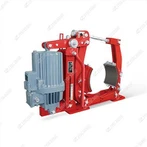
The brake is an important safety component of the crane. It has the functions of preventing the landing of suspended objects and realizing parking. Only the brake without failure can guarantee the correctness of crane operation and safe production. In crane operation, the brake may have insufficient braking force, sudden failure of the brake, excessive temperature of the brake wheel, smoke from the brake pad, and mechanical failure of the brake arm not opening.
The reasons for these mechanical failures are analyzed as follows:
1. Crane brake belt or brake wheel is worn too much.
The crane brake has a small piece of partial fall off.
The main spring is adjusted too loosely.
There is grease stain between the crane brake belt and the brake wheel.
There are stuck places or excessively worn parts outside the living hinge.
The lock nut is loose and the tie rod is loose.
The impeller of the hydraulic push rod release is not flexible.
2. Crane brake pads are severely or large pieces fall off, or the long-stroke electromagnet is stuck, the main spring is invalid, or the main parts of the brake are damaged.
3. The gap between the crane brake and the gasket is adjusted too large or too small.
4. The hinge is stuck or the braking torque is adjusted too much, or the oil cylinder of the hydraulic push rod brake releaser is short of oil and mixed with air, or the grease used by the hydraulic push rod brake releaser does not meet the requirements, or there is dirt between the brake pad and the brake wheel.