
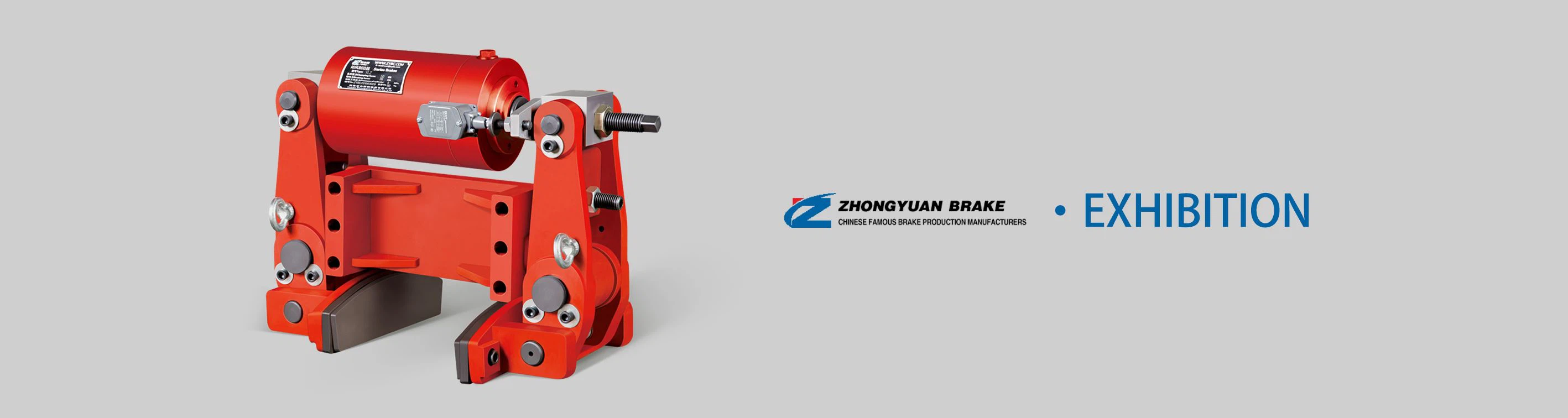
1. Model Core Definition & Core Functions
The YW-E series' "two-step" design is its defining feature, targeting scenarios where "stable deceleration + reliable holding" are critical. Its core functions address industrial pain points like mechanical shock from sudden braking and load displacement caused by external forces:
Core Functions
Two-Stage Braking Control: First-stage "deceleration braking" with adjustable low-to-medium torque ensures smooth speed reduction (avoids mechanical shock); second-stage "holding/windproof braking" adds reinforced torque to lock the equipment firmly.
Fail-Safe Protection: Automatically engages braking in power loss, electro-hydraulic thruster failure, or emergency shutdown-preventing machinery runaway or load displacement.
Adjustable Delay & Torque: The time delay between the two braking stages (1–15 seconds) and torque of each stage are independently adjustable, adapting to different equipment and working condition requirements.
Windproof & Anti-Displacement: Second-stage reinforced braking provides high clamping force, resisting strong wind (common in outdoor cranes) or gravity (for inclined conveyors) to keep equipment stationary.
2. Working Principle
The YW-E series operates on a spring-engaged, electro-hydraulic released principle, with a two-stage torque output driven by a dual-circuit hydraulic system and damping cylinder. Its working cycle includes three key states:
2.1 Brake Release (Operating State)
When the machinery needs to run, the matched electro-hydraulic thruster (e.g., ED/E series) is activated, converting electrical energy into linear hydraulic thrust.
The thrust compresses the internal main braking springs via the lever mechanism, retracting the brake shoes and creating a 0.4–0.8 mm clearance between the friction pads and brake drum.
The brake drum rotates freely with the machinery shaft, enabling normal operation (e.g., crane traveling, conveyor movement).
2.2 Two-Step Braking (Deceleration → Holding)
First-Stage Braking (Deceleration): When braking is initiated (e.g., equipment shutdown), the thruster reduces thrust partially. The main springs release moderate force (adjustable torque: 30–60% of full torque), pushing the brake shoes to clamp the drum gently. This generates stable deceleration torque, gradually reducing the machinery speed without shock.
Second-Stage Braking (Holding/Windproof): After a preset delay (1–15 seconds, adjusted via a one-way flow control valve in the damping cylinder circuit), the thruster cuts off thrust completely. The main springs fully expand, and auxiliary clamping mechanisms engage-applying full braking torque (100% rated torque) to lock the drum firmly. This prevents the stationary equipment from moving due to wind, load inertia, or slope gravity.
2.3 Emergency Response (Fault State)
In case of power loss, thruster leakage, or emergency signals, the thruster's thrust dissipates instantly.
The main springs expand fully within ≤0.3 seconds, skipping the delay and directly applying full braking torque-engaging emergency two-stage braking simultaneously to stop the machinery quickly and avoid hazards.


