
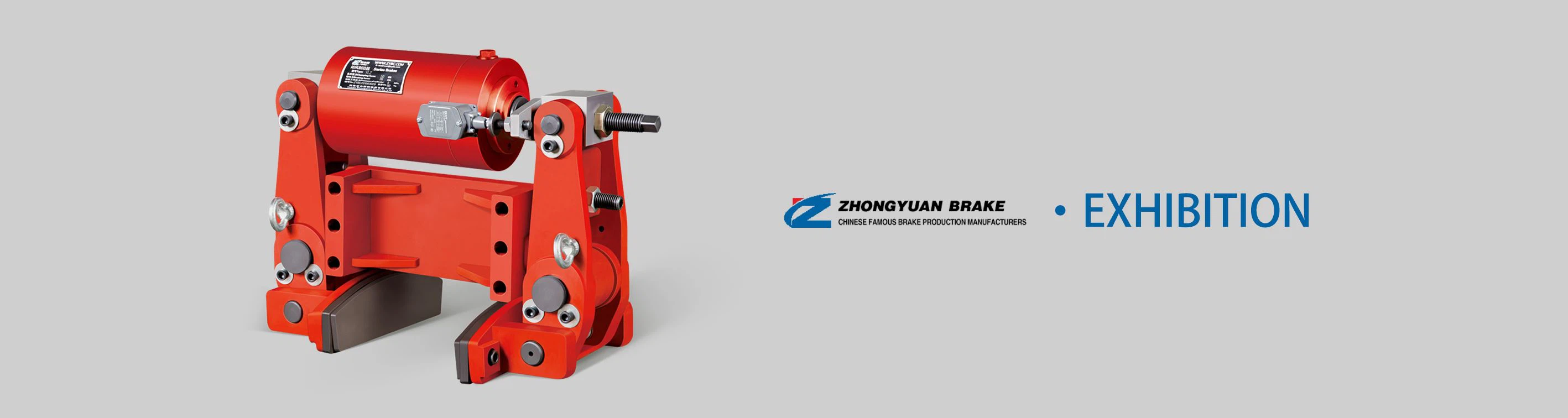
1. Model Interpretation & Core Function
The YWZ9-200/E23A's model code reflects its design upgrades, matching components, and performance scope for quick equipment pairing:
| Model Segment | Meaning |
|---|---|
| YWZ9-A | Upgraded 9th-Generation Drum Brake Series ("A" = enhanced corrosion resistance, intelligent control compatibility, modular design) |
| 200 | Brake drum diameter: 200 mm (medium-sized drum for medium-duty loads) |
| E23A | Matched dedicated electro-hydraulic thruster: E23 variant ("A" = optimized for YWZ9-A's lever ratio, mounting interface, and thrust output) |
Its core functions target high-demand industrial scenarios requiring safety, durability, and adaptability:
High-Frequency & Heavy-Duty Braking: Smoothly decelerates or stops machinery during frequent start-stop cycles (e.g., port conveyors, mining winches) without thermal fading or structural deformation.
Emergency Stopping: Rapidly engages in power loss, thruster failure, or overspeed (≥110% of rated speed) to prevent machinery runaway, avoiding material spillage, equipment damage, or personnel hazards.
Static Load Holding: Secures medium-to-heavy loads (e.g., 5–18 ton lifted goods, bulk materials) during downtime, maintenance, or power outages-ensuring zero accidental movement.
Intelligent Safety Control: Compatible with industrial control systems (PLC, SCADA) via built-in sensors, enabling real-time status monitoring and remote fault diagnosis.
2. Working Principle
The YWZ9-200/E23A operates on a fail-safe principle (spring force for braking, electro-hydraulic thrust for release), inheriting the YWZ9 series' efficient force transmission while optimizing response speed and stability for A-type upgrades. Its working cycle includes three key states:
2.1 Brake Engagement (Safety State)
When the machinery is stationary, in emergency mode, or powered off, internal high-tension compression springs (60Si2MnA alloy steel) expand outward.
The spring force pushes two arc-shaped brake shoes to swing outward, pressing high-performance ceramic-resin friction pads tightly against the inner wall of the rotating brake drum.
Friction between the pads and drum generates stable braking torque (300–450 N·m), resisting the drum's rotation to stop the connected machinery shaft or hold it stationary.
2.2 Brake Release (Operating State)
When the machinery needs to run, the matched E23A electro-hydraulic thruster is activated. The thruster converts electrical energy into linear hydraulic thrust (230 N) via its internal motor, centrifugal pump, and sealed cylinder.
This thrust pulls the integrated modular lever mechanism (A-type optimization), compressing the internal springs and retracting the brake shoes inward. A precise 0.4–0.7 mm clearance is created between the pads and drum-minimizing drag friction and energy loss.
The brake drum rotates freely with the machinery shaft, enabling normal operation (e.g., conveyor movement, winch lifting).
2.3 Emergency Response (Fault State)
In case of power loss, thruster oil leakage, or emergency shutdown signals, the thruster's hydraulic thrust dissipates instantly.
The compressed springs rebound within ≤0.28 seconds, driving the brake shoes to re-clamp the drum-engaging the brake rapidly to stop the machinery and eliminate safety risks.


