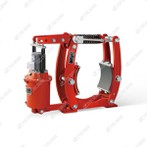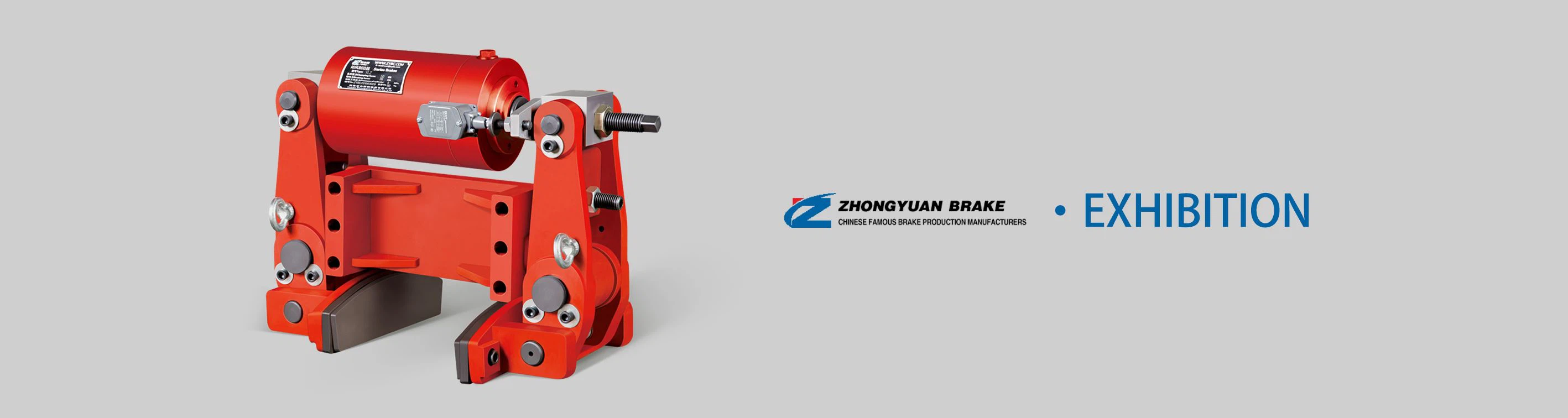
The YW-L Series is a range of industrial-grade electro-hydraulic drum brakes engineered for lightweight to medium-duty rotating machinery, including small cranes (jib, workstation), mini winches, conveyors, and light industrial mixers. Designed with a focus on compactness, energy efficiency, and easy installation, this series integrates electro-hydraulic actuation with a simplified drum-braking structure-delivering reliable dynamic braking, static load holding, and fail-safe emergency stopping for equipment with moderate load demands (typically 0.5–10 tons). Its "L" designation (often standing for "Lightweight" or "Low-profile") reflects adaptations for space-constrained installations and low-inertia operation, making it a cost-effective choice for workshops, small factories, and logistics facilities. Below is a detailed breakdown of its series characteristics, core structure, working principle, key features, typical applications, and technical specifications:
1. Series Overview & Core Function
The YW-L Series follows the "YW" product lineage (Y = Hydraulic actuation, W = Drum-style braking) but is optimized for lighter-duty scenarios. Its core functions align with industrial safety and operational needs, including:
Dynamic Braking: Decelerating or stopping machinery (e.g., small crane hoists, conveyor belts) with smooth, controlled torque to avoid load sway or mechanical shock.
Static Load Holding: Securing lightweight loads in place during pauses (e.g., suspending tools with a jib crane) or maintenance.
Fail-Safe Braking: Automatically engaging in power failure or system faults to prevent equipment runaway-critical for operator safety and asset protection.
The series covers drum diameter compatibility (120–300mm) and torque outputs (50–500 N·m), with single or double-shoe configurations to match diverse lightweight machinery requirements.
2. Core Structure & Key Components
The YW-L Series features a simplified, modular design to balance performance and cost-effectiveness, with four core subsystems:
2.1 1. Miniaturized Electro-Hydraulic Thruster (Power Core)
As the brake's actuation engine, the thruster is optimized for lightweight applications:
Compact Motor-Pump Assembly: A 220V/380V AC (50Hz/60Hz) motor (power range: 0.18–0.55 kW) paired with a small gear pump. It generates low-to-medium hydraulic pressure (5–12 MPa) to actuate the brake, consuming 40% less energy than heavy-duty YW-series thrusters.
Sealed Hydraulic Chamber: Uses nitrile rubber (NBR) seals (upgradeable to FKM for high temperatures) to prevent oil leakage. The thruster's small footprint (≤ 180mm × 100mm × 150mm) fits in tight spaces near lightweight machinery.
Fast Response: Achieves full extension/retraction in ≤ 0.8 seconds, enabling timely braking for equipment with short cycle times (e.g., small conveyors).
2.2 2. Lightweight Drum Braking Assembly (Friction Core)
Calibrated for small-diameter drums, this assembly prioritizes low inertia and easy maintenance:
Brake Shoes: Single or double arcuate shoes made of QT350 ductile iron (lighter than cast iron) to minimize machinery inertia. The shoes are paired with resin-based friction linings (μ ≥ 0.40) that resist wear and operate safely at temperatures up to 280°C.
Simplified Lever Linkage: A one-piece steel lever system distributes force evenly across the linings, ensuring 90%+ contact with the drum (diameter: 120–300mm). This avoids uneven wear and reduces adjustment needs.
Drum Compatibility: Designed for standard mild-steel drums (thickness: 8–15mm), with adjustable mounting brackets to accommodate minor alignment variations.
2.3 3. Compact Fail-Safe Spring Mechanism (Safety Core)
A space-efficient spring system ensures emergency braking without adding excess weight:
Low-Force Manganese-Steel Springs: 1–2 compression springs (total force: 1.5–5 kN) housed in the brake base. When hydraulic pressure drops (power failure), the springs expand to push the shoes against the drum, locking the shaft and holding loads securely.
2.4 4. User-Friendly Adjustment & Protection (Durability Core)
Tool-Free Gap Adjusters: Knurled screws on the lever linkage allow operators to fine-tune the brake gap (0.3–0.5mm) without special tools, compensating for lining wear over time.
Basic Corrosion Protection: The brake housing and levers are coated with a 50μm-thick epoxy primer to resist dust and mild moisture-suitable for indoor workshops or covered outdoor areas.
Visual Wear Indicator: A small tab on the friction lining protrudes when linings reach their minimum thickness (≤ 3mm), providing a clear signal for replacement.
3. Working Principle
The YW-L Series operates on a standard electro-hydraulic fail-safe cycle, adapted for lightweight machinery:
3.1 1. Brake Release (Normal Operation)
When the machinery (e.g., a small jib crane) is activated, power is supplied to the electro-hydraulic thruster.
The thruster's motor drives the pump to build hydraulic pressure, which pushes a piston and push rod to overcome spring tension.
The push rod pulls the brake shoes away from the drum, creating a small gap. The drum (connected to the machinery's shaft) rotates freely, enabling lifting, conveying, or mixing.
3.2 2. Brake Engagement (Controlled Stopping/Holding)
Controlled Stopping: To slow or stop the machinery, the thruster's power is reduced, lowering hydraulic pressure. The springs begin to expand, pushing the shoes against the rotating drum.
Torque Generation: Friction between linings and drum generates 50–500 N·m of braking torque, decelerating the drum to a stop in ≤ 1.0 second (under rated load) to avoid load instability.
Static Holding: For mid-cycle pauses (e.g., holding a load at a workstation), the thruster's power is cut to ~25% of rated output. Reduced pressure allows the springs to partially engage the brake, holding the load without straining the machinery.
3.3 3. Emergency Braking (Power Failure/Fault)
In case of power loss (e.g., workshop outage) or a machinery fault (e.g., overload), the thruster loses pressure instantly.
The springs fully expand within milliseconds, slamming the shoes against the drum to lock the shaft. The brake stops the machinery within ≤ 0.9 seconds, preventing load drops or collisions.
4. Key Features of the YW-L Series
The YW-L Series is tailored to the needs of lightweight industrial machinery, with distinct advantages:
4.1 1. Lightweight & Low-Profile Design
Weighing just 8–20 kg (depending on model), the brake adds minimal inertia to small machinery. Its low height (≤ 180mm) fits in tight spaces, such as under jib crane arms or near mini winch drums.
4.2 2. Energy Efficiency
The 0.18–0.55 kW thruster consumes less power than heavy-duty alternatives, making it ideal for machinery that operates 8+ hours daily (e.g., workshop conveyors). This reduces long-term energy costs for small businesses.
4.3 3. Easy Installation & Maintenance
Standard flange or bracket mounts align with lightweight machinery interfaces, requiring no custom modifications.
Snap-in friction linings can be replaced in ≤ 20 minutes, and the thruster's oil fill port is easily accessible for routine checks-minimizing downtime.
4.4 4. Cost-Effective Performance
Simplified components (e.g., single-shoe options, basic linkage) lower upfront costs compared to heavy-duty YW-series brakes, while maintaining reliability for light-to-medium loads.
4.5 5. Compliance with Basic Safety Standards
Meets industrial safety regulations for lightweight machinery, including GB/T 6333-2019 (Chinese electro-hydraulic drum brake standards) and ISO 4301-3 (light-duty crane brakes). It is also CE-certified for use in EU workshops.
5. Typical Applications
The YW-L Series is designed for lightweight industrial equipment, including:
Small Cranes: Jib cranes (workshop tool lifting), workstation cranes (assembly line material handling), and mini gantry cranes (warehouse pallet moving) with 0.5–5 ton capacity.
Mini Winches: Handheld or fixed mini winches for lifting small parts (e.g., automotive components) or pulling light loads (≤ 3 tons).
Light Conveyors: Belt conveyors in workshops, packaging lines, or small logistics centers-braking to control material flow.
Light Machinery: Small mixers (food processing, paint mixing), textile machine drives, and mini hoists (maintenance tasks).