Latest Products


Contact Us
- Wei Four Road, Weizhuang industrial Park, Changyuan District, Xinxiang City, Henan Province, China
- sales@zybc.com
- +86-373-7136666


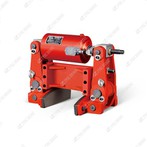
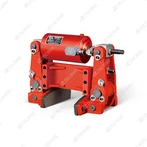
DLZ100 Series Power-driven Wheel Brakes
The DLZ100 series power - driven wheel brake is a normally - closed, disc - spring - actuated, electrically released wind - resistant wheel brake, designed for outdoor cranes and port machinery to provide reliable wind - proof braking during operation and parking, featuring an oil - free...
Description
The DLZ100 series power - driven wheel brake is a normally - closed, disc - spring - actuated, electrically released wind - resistant wheel brake, designed for outdoor cranes and port machinery to provide reliable wind - proof braking during operation and parking, featuring an oil - free electric drive, low energy consumption, and a fail - safe structure. Below is a detailed breakdown of its core parameters, structural features, working principles, applications, maintenance, and common faults with solutions.
Core Technical Parameters
| Parameter | Standard Value |
|---|---|
| Rated static friction force | 135-150 kN |
| Applicable wheel diameter | 500-1000 mm |
| Maximum wheel pressure | ≤100 t |
| Motor power (opening) | 1.5 kW (starting), 60 W (holding by electromagnet) |
| Current (opening/holding) | 3 A / 0.35 A |
| Friction lining thickness | Original 14 mm (replace when ≤3 mm) |
| Limit switch | IP65, for interlock protection |
| Working environment | -20℃ to +50℃, salt - fog - resistant |
| Fastener material | Stainless steel (QPQ optional) |
| Weight | ~180-200 kg |
| Compliance standard | JB/T 10917-2008 |
Key Structural & Design Features
Fail - Safe Normally - Closed Design
Disc springs provide the main braking force; the brake is released by an electric motor and held by an electromagnet. In case of power failure, the disc springs instantly apply braking to prevent wind - induced movement.
The equal - retraction mechanism ensures uniform clearance (0.5-1 mm) between the friction lining and the wheel end face, avoiding dragging and uneven wear.
Oil - Free Electric Drive & Low Energy Consumption
Electric motor drives the release, eliminating hydraulic oil leakage and environmental pollution risks. The electromagnet maintains the released state, reducing long - term energy consumption by over 80% compared with continuous motor operation.
Interlock Safety & Manual Release
An IP65 - rated limit switch confirms the release position and interlocks with the crane traveling mechanism, allowing the crane to move only when fully released.
Equipped with a manual release lever for safe maintenance when power is off.
Corrosion - Resistant & Durable
All fasteners and pins are made of stainless steel; the friction lining is salt - fog - and water - resistant, suitable for coastal environments. The fully sealed drive unit has a high protection level and a long service life.
Working Principle
It operates in the disc - spring braking + electric release + electromagnet holding mode:
Braking State (Power - Off/Wind - Proof): When the crane stops or loses power, disc springs push the friction linings to clamp the wheel end face, generating a 135-150 kN static friction force to prevent wind - induced rolling.
Release State (Operation): When the crane is ready to move, the electric motor starts to compress the disc springs and separate the friction linings from the wheel. After release, the electromagnet takes over to maintain the state, and the motor stops working to save energy.
Interlock Protection: The limit switch sends a release - in - place signal to the crane control system. The traveling mechanism can start only after receiving the signal.
Emergency & Manual Release: In case of power failure, the disc springs apply braking automatically. The manual release lever can be used to disengage the brake for maintenance.
Typical Applications
It is mainly installed on the passive wheels of large outdoor rail - mounted cranes, such as gantry cranes, quayside container cranes, and ship - to - shore cranes, providing wind - proof braking during operation. It can also work with anchoring devices and wind - resistant cables for double protection during long - term parking, suitable for cranes with a rated load of 80-200 t.
Common Faults & Solutions Table
| Fault Phenomenon | Possible Causes | Step - by - Step Solutions | Preventive Measures |
|---|---|---|---|
| Failure to release (crane cannot travel) | 1. Insufficient motor power or electromagnet failure; 2. Disc spring stuck or fatigued; 3. Limit switch misalignment; 4. Motor control circuit fault | 1. Check motor voltage/current; replace the faulty electromagnet; 2. Clean the disc spring chamber; replace fatigued springs; 3. Re - align the limit switch to ensure the release signal is normal; 4. Inspect the control circuit and repair loose connections | - Test motor/electromagnet monthly; - Lubricate spring guides quarterly |
| Weak braking force (wheel slips under wind load) | 1. Worn friction lining (≤3 mm); 2. Uneven clearance; 3. Fatigued disc springs; 4. Contaminated lining (oil/dust) | 1. Replace the lining; 2. Adjust the equal - retraction device to set the clearance to 0.5-1 mm; 3. Replace the disc spring set; 4. Clean the lining and wheel face with degreaser | - Check lining thickness monthly; - Avoid oil leakage onto friction surfaces |
| Motor overheating during release | 1. Long - term motor operation (not switched to electromagnet holding); 2. Voltage fluctuation; 3. Motor bearing wear | 1. Check the control relay to ensure the motor stops after release; 2. Stabilize the voltage within ±5% of the rated value; 3. Replace worn bearings and lubricate regularly | - Test the motor holding switch weekly; - Lubricate bearings every 6 months |
| Limit switch failure (no interlock signal) | 1. Poor contact due to corrosion; 2. Damaged wiring; 3. Misaligned actuator | 1. Clean switch contacts and apply anti - corrosion grease; 2. Replace damaged wires and check IP65 protection; 3. Re - align the actuator to trigger reliably | - Clean the switch monthly; - Use shielded cables outdoors |
| Abnormal noise during braking | 1. Loose mounting bolts; 2. Uneven lining wear; 3. Wheel end face deformation | 1. Tighten M16 bolts to 80-100 N·m; 2. Replace unevenly worn linings; 3. Reface the wheel end face if runout >0.1 mm | - Tighten bolts quarterly; - Check wheel runout annually |
| Manual release failure | 1. Jammed release lever; 2. Broken connecting rod | 1. Apply penetrating oil to the lever pivot; 2. Check the connecting rod for bending; replace if damaged | - Test manual release after each maintenance |
Maintenance Guidelines
Daily Inspection (5-10 Minutes/Shift): Check the friction lining for wear and contamination, the limit switch signal, and the motor/electromagnet operation.
Monthly Maintenance: Measure the lining thickness; adjust the clearance; test the interlock function.
Quarterly Maintenance: Lubricate the disc spring guides and motor bearings; inspect the manual release mechanism.
Annual Maintenance: Replace the disc spring set and worn seals; conduct a 1.2 - times rated wind load braking test.
Summary
The DLZ100 series stands out for its oil - free electric drive, low energy consumption, fail - safe design, and easy maintenance, making it an ideal wind - proof solution for large outdoor cranes and port machinery, especially in environmentally sensitive areas.
Hot Tags: dlz100 series power-driven wheel brakes, China, manufacturers, supplier, factory, customized
You Might Also Like